
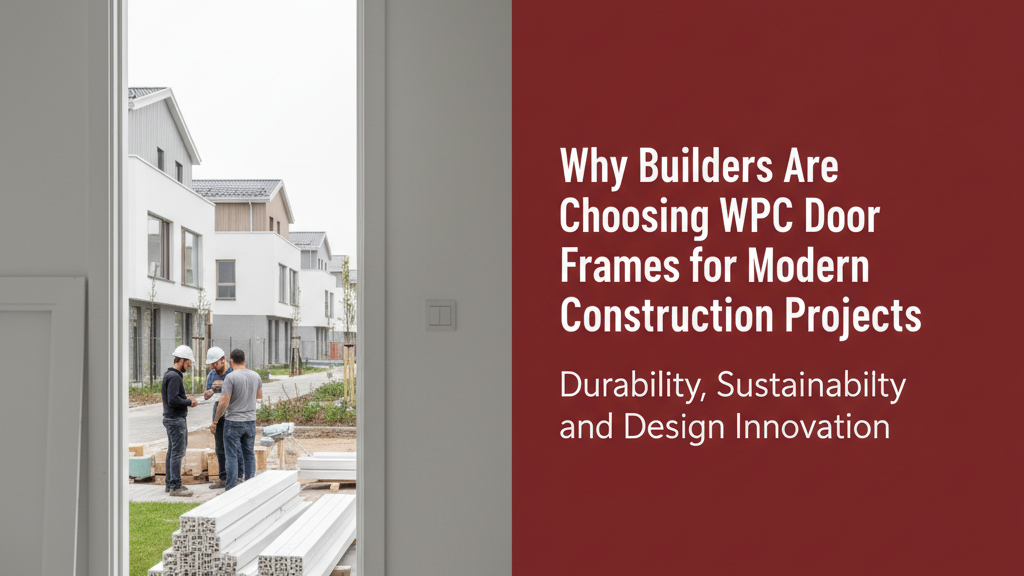
The Rising Popularity of WPC Door Frames
In recent years, wood-plastic composite (WPC) door frames have gained significant traction among Indian builders and architects. This shift reflects a broader industry move towards modern building solutions that balance durability, cost-efficiency, and sustainability. Unlike traditional timber or metal frames, WPC combines processed wood fibres with thermoplastics, offering a versatile material that performs consistently in India’s varied climatic conditions.
Advantages of WPC Over Traditional Materials
WPC door frames address several limitations of conventional materials:
- Moisture resistance: Unlike wood, WPC doesn’t warp or rot during monsoons, maintaining dimensional stability even at 80–90% humidity levels.
- Termite-proof: Eliminates the need for chemical treatments required for wooden frames in tropical climates.
- Thermal performance: Better insulation than aluminium, reducing heat transfer by approximately 30% compared to metal frames.
Durability and Longevity
WPC frames demonstrate exceptional resilience in real-world conditions. Field observations suggest:
- Lifespan: 15–25 years with proper installation, outperforming untreated wood (7–12 years) in humid regions.
- Weather resistance: UV-stabilised formulations prevent fading and cracking in temperatures ranging from 0°C to 60°C.
- Structural integrity: Maintains screw-holding capacity 40–50% better than PVC over a 10-year period.
Cost-Effectiveness in the Long Run
While WPC frames may have a 10–15% higher upfront cost than basic timber, their total ownership costs are often lower due to:
| Factor | WPC | Wood |
|---|---|---|
| Maintenance frequency | Every 5–7 years | Annually |
| Replacement cycle | 20+ years | 8–15 years |
| Additional treatments | None | Termite proofing, varnishing |
Environmental Benefits of WPC
WPC aligns with eco-friendly construction practices through:
- Material sourcing: Uses 60–70% recycled wood and plastic content in most Indian formulations.
- Carbon footprint: Production emits 35% less CO₂ than aluminium frame manufacturing.
- End-of-life: Fully recyclable, unlike treated wood containing chemical preservatives.
Builders participating in green certification programmes (such as GRIHA) increasingly specify WPC to earn sustainability credits.
Ease of Installation and Maintenance
WPC frames simplify construction workflows with:
- Precision engineering: Factory-made components reduce on-site cutting errors by approximately 25%.
- Lightweight: 30–40% lighter than hardwood frames, easing handling in high-rise projects.
- Cleaning: Requires only occasional wiping with mild detergent—no polishing or seasonal treatments.
Case Studies: Successful Projects Using WPC Door Frames
Notable implementations across India demonstrate WPC’s versatility:
- Coastal residences (Goa/Mumbai): Withstood salt spray corrosion where metal frames typically fail within 5–7 years.
- Hospital projects (Delhi NCR): Met hygiene requirements with seamless, non-porous surfaces that resist bacterial growth.
- Budget housing (Tamil Nadu): Reduced installation time by 18% compared to traditional wooden frames in a 500-unit development.
Future Trends in Construction Materials
The WPC market is projected to grow at 11% CAGR in India (2023–28) as manufacturers develop:
- Enhanced formulations: Fire-retardant grades meeting IS 4350 for public buildings.
- Integrated systems: Pre-assembled frame-and-door units with factory-fitted seals.
- Aesthetic innovations: Textured finishes mimicking premium wood grains without maintenance drawbacks.
As building codes evolve to address sustainability and disaster resilience, WPC’s balanced performance makes it a compelling choice for forward-thinking projects.