Introduction to Textured Putty in Interior Design
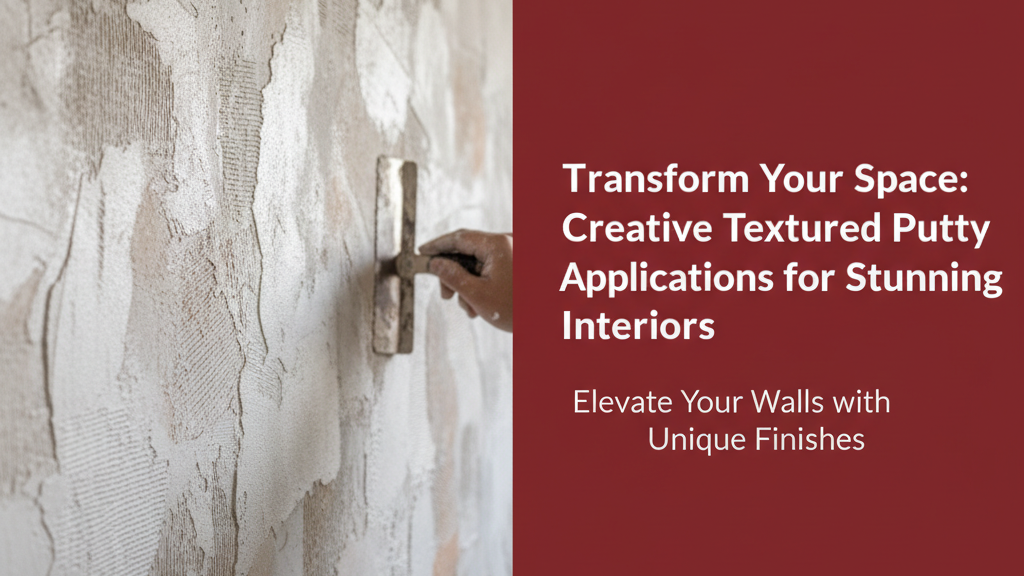
Textured putty has emerged as a versatile medium for creating distinctive wall finishes that go beyond conventional paints. Unlike standard wall putty used for surface preparation, textured variants contain additives like marble dust, polymers, or metallic pigments that allow for sculptural effects. In Indian homes, these finishes bridge the gap between affordability and high-end aesthetics, particularly in spaces where humidity or temperature fluctuations rule out traditional materials like Venetian plaster.
Benefits of Using Textured Putty
- Durability: Polymer-modified textured putties withstand India’s monsoon humidity (up to 80% RH) without flaking, unlike lime-based plasters.
- Thermal Performance: Thick applications (3–5 mm) provide slight insulation, reducing heat ingress by 1–2°C compared to flat paints.
- Repairable: Localised damage can be patched without visible seams—a practical advantage over wallpapers.
- Breathability: Micro-porous formulations prevent moisture trapping, making them suitable for coastal regions.
Popular Textured Putty Finishes
Venetian Plaster: Elegance Redefined
Achieving the illusion of polished marble, this technique involves layering translucent putty with a trowel. Modern acrylic-based versions mimic traditional limestone putty at 40–60% lower cost while offering better crack resistance. Ideal for feature walls in living rooms or lobbies.
Concrete Effect: Industrial Chic
Textured putty with fine aggregates replicates raw concrete’s matte, slightly uneven texture. Unlike actual concrete walls, these are 80% lighter and won’t transfer heat. Works well in home offices or cafes seeking an urban aesthetic.
Metallic Finishes: Modern Glamour
Aluminium or mica powder additives create subtle reflective surfaces. Bronze-toned finishes can make compact bedrooms appear more spacious by scattering light. Requires skilled application to avoid uneven sheen.
Step-by-Step Guide to Applying Textured Putty
Preparing Your Surface
- Clean walls with pH-neutral detergent to remove dust or grease.
- Fill cracks >1 mm wide with standard wall putty and sand smooth.
- Apply a primer compatible with your textured putty (check manufacturer guidelines).
Choosing the Right Tools
- Steel trowel: For Venetian and concrete effects (150–200 mm width recommended).
- Notched spatula: Creates parallel grooves for linear textures.
- Sea sponge: Dabbed lightly for stucco-like finishes.
Application Techniques for Different Finishes
Venetian plaster effect: Apply thin layers (0.5 mm each) at 15° angles, burnishing with a clean trowel after each coat dries (typically 4–6 layers).
Concrete effect: Use a thick mix (add 10% water by volume) and drag the trowel unevenly to expose minor aggregates.
Maintaining Textured Putty Surfaces
Cleaning and Care Tips
- Dust monthly with a soft brush or microfiber cloth.
- For stains, use a damp cloth—avoid abrasive cleaners that may scratch metallic finishes.
- In kitchens, apply a matte clear coat to resist grease splatters.
Repairing Minor Damages
- Scrape loose material from the damaged area.
- Apply matching putty with a palette knife, feathering edges.
- Recreate the texture using original tools before the patch dries.
Inspiration: Real-Life Textured Putty Applications
Living Room Transformations
A Kolkata apartment used sand-textured putty in warm beige to create a feature wall resembling Jaisalmer stone, paired with indirect LED lighting to highlight the relief.
Bedroom Accent Walls
In a Bengaluru master bedroom, a midnight blue metallic finish with copper undertones added depth behind the headboard, complementing brass fixtures.
Commercial Spaces with Character
A Delhi café combined concrete-effect putty walls with reclaimed wood shelves, achieving industrial charm without structural modifications.
Conclusion: Why Textured Putty is a Game-Changer
Textured putty democratises designer finishes by offering durability against Indian climatic conditions, easier application than traditional plasters, and repair-friendly maintenance. Whether replicating heritage techniques or experimenting with contemporary effects, it provides a cost-effective canvas for personalised spaces.