Introduction to Sustainable Construction
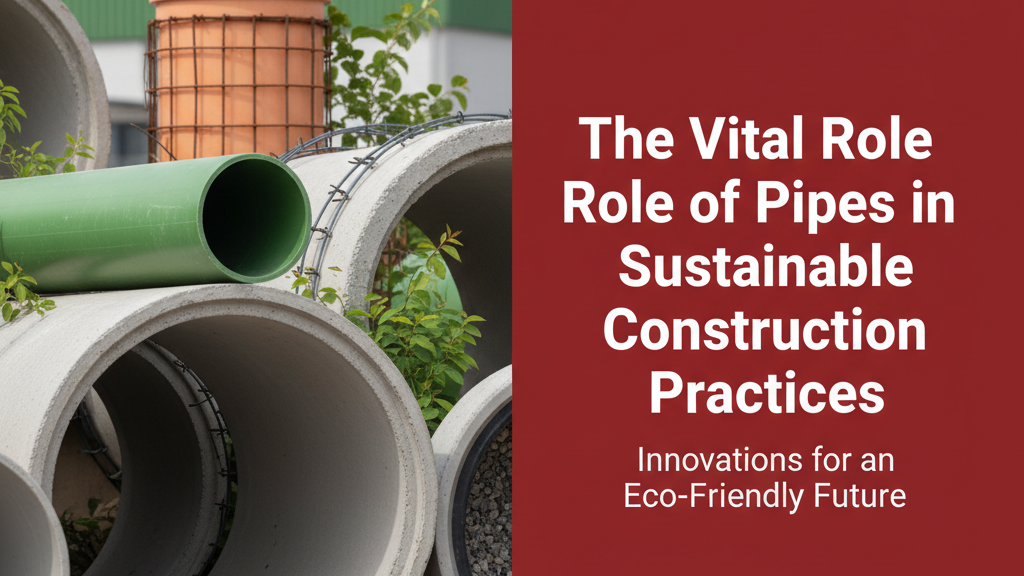
Modern construction increasingly prioritises materials and methods that reduce environmental impact while maintaining structural integrity. With buildings accounting for nearly 40% of global energy-related CO₂ emissions according to the International Energy Agency (IEA), every component choice matters – including piping systems often overlooked in sustainability discussions.
Why Pipes Matter in Sustainable Building
Piping networks influence a structure’s sustainability through:
- Material lifespans: Frequent replacements increase resource use and waste
- Water efficiency: Leak-proof joints and smooth interiors reduce losses
- Embodied energy: Production and transportation carbon footprints vary significantly
- End-of-life handling: Recyclability avoids landfill burden
Indian monsoons and hard water conditions make corrosion-resistant materials particularly vital for long-term sustainability.
Types of Sustainable Piping Materials
Three predominant materials balance ecological and functional needs differently:
| Material | Key Sustainability Features | Typical Lifespan* |
|---|---|---|
| HDPE | 100% recyclable, chemical/rust resistant, low-friction interior | 50-100 years |
| uPVC | Lightweight (reduced transport emissions), lead-free formulations | 25-40 years |
| Copper | Infinite recyclability without quality loss, natural antimicrobial properties | 70+ years |
HDPE Pipes: Durability Meets Eco-Friendliness
High-Density Polyethylene pipes offer distinct advantages for green projects:
- Leak-free joints: Heat-fused connections eliminate gasket failures common in tropical climates
- Resistance: Tolerates pH variations (2-14) common in Indian groundwater
- Lightweight: 1 metre of 90mm HDPE pipe weighs ~1.5kg versus 4kg for equivalent CI
- Recycling: Post-industrial HDPE scraps are routinely reused in manufacturing
Their flexibility also reduces fitting requirements, cutting material use by 15-20% compared to rigid alternatives in complex layouts.
PVC Pipes: Cost-Effective Sustainability
Modern uPVC formulations address early environmental concerns:
- Chlorine content derives from salt rather than petroleum
- BIS-standard pipes contain no heavy metal stabilisers
- Smooth bores maintain flow efficiency with 40% less pumping energy than corroded metal pipes
Their 85% lower embodied energy than copper makes them practical for large-scale water distribution where budgets constrain material choices.
Copper Pipes: Longevity and Recyclability
Though energy-intensive to produce initially, copper’s infinite recyclability and natural properties suit specialised applications:
- 95% of copper ever mined remains in use due to recycling
- Inhibits bacterial growth (studies show 99.9% E.coli reduction in 6 hours)
- Thermal conductivity benefits solar water heating systems
Best deployed in accessible locations to facilitate eventual recovery.
Innovations in Pipe Manufacturing for Sustainability
Recent advancements enhance eco-profiles:
- Bio-based plastics: Some HDPE grades now incorporate sugarcane ethanol
- Smart thickness: Computer-modelled stress analysis enables material optimisation
- Closed-loop water: Factories like SBM Gold’s Siliguri plant recycle 100% of process water
Water Efficiency Through Smart Pipe Systems
Material choice directly impacts conservation:
- HDPE’s smooth interior maintains Hazen-Williams C-factor >150 versus 80-100 for aged metal pipes
- Multi-layer composites minimise thermal expansion/contraction leaks at joints
- Colour-coding (blue for potable, grey for recycled) prevents cross-connection waste
Case Studies: Sustainable Projects Using Eco-Friendly Pipes
Chennai Rainwater Harvesting: HDPE piping networks in 1,200 apartments reduced municipal water demand by 35% annually, with joints surviving clayey soil shifts.
Punjab Solar Communities: uPVC insulated conduits protected wiring in agricultural solar installations, with 60% lower embodied carbon than metal trunking alternatives.
Challenges and Solutions in Sustainable Pipe Usage
Barriers to adoption include:
- Perception gaps: Educating contractors on modern plastic pipe lifespans
- Segregation: Post-consumer pipe recycling requires colour/material separation
- Thermal limits: uPVC generally withstands up to 60°C versus copper’s 120°C
Future Trends in Sustainable Piping
- Blockchain tracking: QR codes on pipes documenting recycled content percentages
- Self-healing materials: Microcapsules releasing sealants upon crack detection
- 3D printing: On-site pipe production from recycled polymer pellets
Conclusion: Building a Greener Future with Pipes
From reducing water losses to enabling material circularity, pipe selection profoundly influences construction sustainability. Specifying ISI-certified HDPE, lead-free uPVC, or responsibly sourced copper based on project requirements allows builders to meet both performance and environmental goals – one joint at a time.