
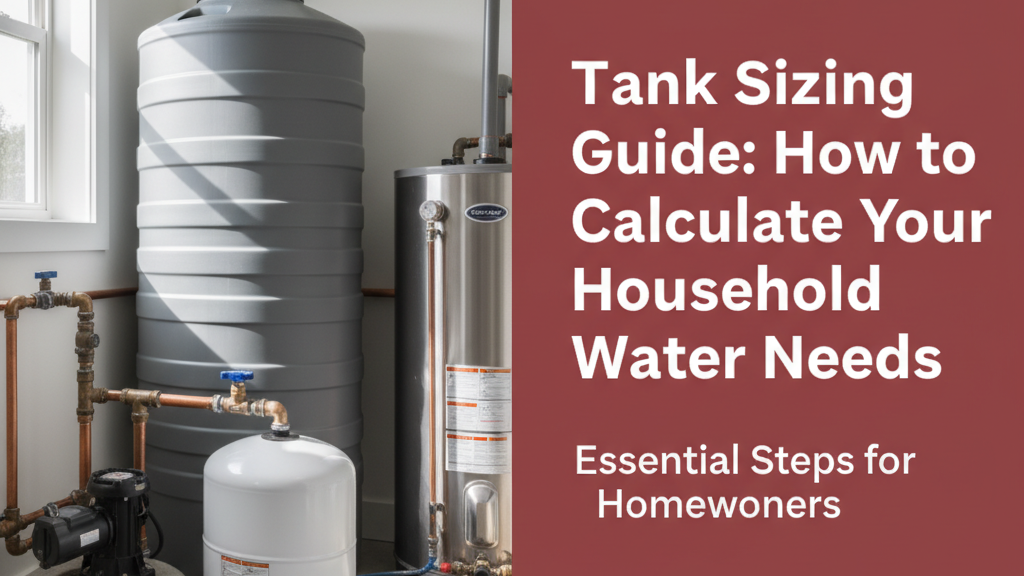
Understanding Water Tank Sizing Basics
Selecting the correct water tank size for your household is a balance between meeting daily needs and preparing for dry spells. A well-sized tank ensures adequate storage without unnecessary expense or space usage. In Indian conditions, where monsoon cycles and municipal supply irregularities are common, independent storage becomes particularly valuable.
Factors Affecting Your Household Water Needs
Four primary elements determine your ideal tank capacity:
- Resident count: More occupants mean higher consumption across drinking, cooking, cleaning, and sanitation needs
- Usage预订atterns: Homes with gardening, car washing, or frequent laundry will require additional reserves
- Supply reliability: Areas with irregular municipal water need larger buffers between refills
<箱li>Climate: Hotter regions increase bathing and hydration needs, while monsoon areas may prioritise rainwater harvesting
Daily Water Consumption Per Person
The Central Public Health and Environmental Engineering Organisation (CPHEEO) suggests these baseline figures for Indian households in litres per person daily:
| Purpose | Urban Consumption | Rural Consumption |
|---|---|---|
| Drinking | 5 | 3 |
| Cooking | 7 | 5 |
| Bathing | 55 | 30 |
| Flushing | 35 | 15 |
| Other Cleaning | 20 | 10 |
| Total | 122 | 63 |
These values serve as starting points—adjust for personal habits like longer showers or water-efficient appliances.
Household Size and Usage Patterns
Multiply per-person needs by your household size, then factor in:
- Appliances: Washing machines (50-80L per load) and dishwashers (15-30L per cycle) add significantly
- Outdoor use: Gardening can consume 200-500L weekly depending on plot size
- Safety buffer: Add 15-20% capacity for unexpected needs or guests
Example calculation for a 4-member urban household: 122 litres × 4 persons = 488 litres, plus 20% buffer → ~585 litres daily requirement.
Climate and Seasonal Variations
Tailor your approach based on regional characteristics:
- Tropical regions: Increase baseline by 15-25% for frequent bathing
- <柬优rong>Arid zones: Account for 30-45% higher gardening needs
- Monsoon areas: Size tanks to store at least 7-10 days’ supply for dry intervals
Step-by-Step Calculation Method
Gathering Essential Data
Document for 3-5 days:
- Number of toilet flushes per day
- Laundry cycles and load sizes
- Outdoor water use (gardening, vehicle cleaning)
- Shower durations
Calculating Daily Water Requirements
Apply this formula:
([Per-person consumption] × [Household members]) + ([Appliance use] × [Frequency]) + ([Outdoor use]) = Daily litres
Accounting for Drought Periods
Multiply your daily total by:
- 3-5 days for municipalities with regular supply
- 7-10 days for areas with frequent shortages
Choosing the Right Tank Size
Match your calculated needs to standard capacities (500L, 1,000L, 2,000L etc.). Consider:
- Physical space: Overhead tanks typically suit 500-2,000L, while underground systems accommodate larger volumes
- Material durability: For SBM Gold’s HDPE water tanks, UV-resistant formulations maintain water quality in exposed installations
Common Mistakes to Avoid
- Underestimating outages: During summer, municipal supply intervals often lengthen
- Ignoring future needs: Family expansion or new appliances may increase demand
- Poor placement: Ground tanks in flood-prone areas risk contamination
Additional Considerations for Tank Selection
Beyond capacity:
- Color: Dark exteriors reduce algae growth in sunlight
- Fittings: Ensure compatibility with existing plumbing
- Certification: BIS-IS 12701 certification guarantees material safety
Alternative Water Sources and Their Impact
Incorporating rainwater harvesting or borewells? Adjust tank sizing accordingly:
- Rainwater systems: Size collection tanks to capture >70% of monsoon rainfall
- Borewell supplements: Can reduce storage needs by 30-40% in water-rich areas
Always maintain a minimum municipal water buffer for pump failures or groundwater depletion.