Understanding Wall Cracks
Wall cracks are a common occurrence in Indian homes due to factors like thermal expansion, structural settling, and moisture exposure. While small cracks often cause cosmetic concerns, deeper fissures may indicate underlying structural issues. Recognising the type and severity of cracks helps determine the appropriate repair method.
Causes of Wall Cracks
Before attempting repairs, identify what’s causing the damage:
- Thermal movement: Daily temperature fluctuations cause materials to expand/contract, leading to hairline cracks
- Structural settling: New buildings (up to 5 years old) often develop minor cracks as the structure stabilises
- Moisture penetration: Leaks or high humidity degrade plaster and cause blistering
- Poor workmanship: Incorrect sand-cement ratios or inadequate curing during construction
- Vibrations: Heavy traffic or machinery near the property
When to Use Wall Putty for Wall Cracks
Wall putty is ideal for addressing:
- Hairline cracks (under 1mm width)
- Surface-level plaster cracks
- Pre-paint preparation on uneven walls
- Minor imperfections in concrete/masonry
Avoid using putty for:
- Cracks wider than 2mm
- Structural cracks that reappear after repair
- Areas with active water leakage
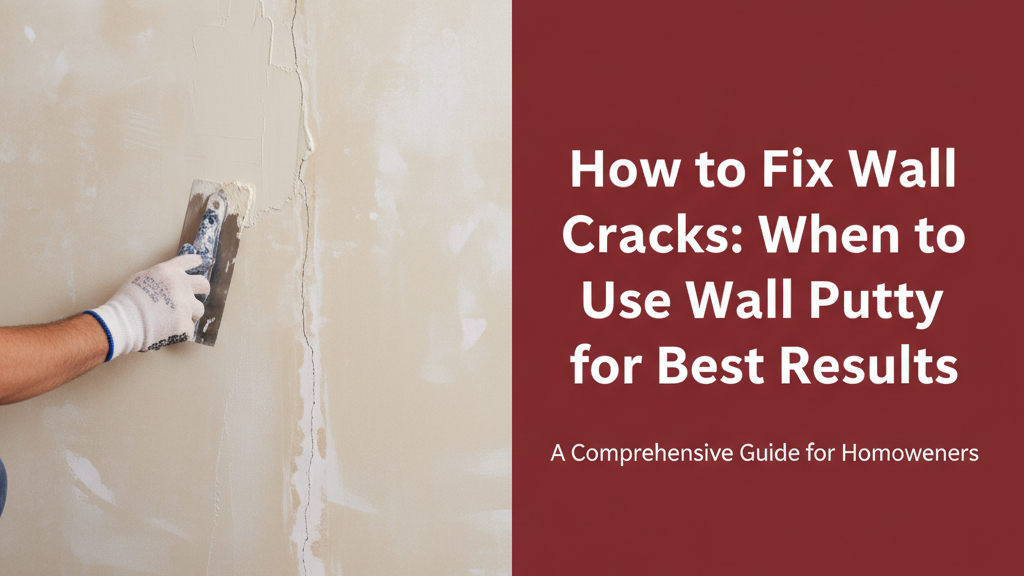
How to Apply Wall Putty for Crack Repair
Quality wall putty formulations (like those meeting IS 15477 standards) provide excellent adhesion when applied correctly:
- Surface preparation: Remove loose material with a wire brush and wipe away dust
- Crack widening: For better adhesion, slightly widen hairline cracks (2-3mm) using a scraper
- Priming: Dampen the area lightly for cement-based putties (check manufacturer guidelines)
- Application: Press putty firmly into cracks using a putty knife at a 45° angle
- Feathering: Blend edges smoothly with the surrounding wall surface
- Curing: Allow 24-48 hours drying before sanding/painting
Step-by-Step Guide to Fixing Cracks with Putty
| Crack Type | Preparation | Putty Layers | Curing Time |
|---|---|---|---|
| Hairline (<1mm) | Clean only | 1 thin coat | 12-18 hours |
| Medium (1-2mm) | Widen slightly | 2 thin coats | 24 hours |
For best results in humid climates, consider acrylic-modified putties that resist moisture absorption.
Alternative Solutions for Severe Wall Cracks
When cracks exceed putty’s capabilities:
- Epoxy injections: For structural cracks in concrete
- Mesh tape: Fibreglass mesh with joint compound for plasterboard
- Professional assessment: Required for cracks wider than 5mm or those affecting door/window frames
Diagonal cracks originating from corners often indicate foundation movement and require structural evaluation.
Maintaining Your Walls After Repair
Extend your repair’s lifespan with these practices:
- Inspect walls seasonally, especially after monsoons
- Address plumbing leaks promptly to prevent moisture damage
- Use breathable paints to allow trapped moisture to escape
- Maintain consistent indoor humidity levels (ideally 40-60%)
- Consider exterior waterproofing for buildings in heavy rainfall areas
Properly applied wall putty repairs typically last 3-5 years under normal conditions, depending on environmental factors and surface preparation quality.