
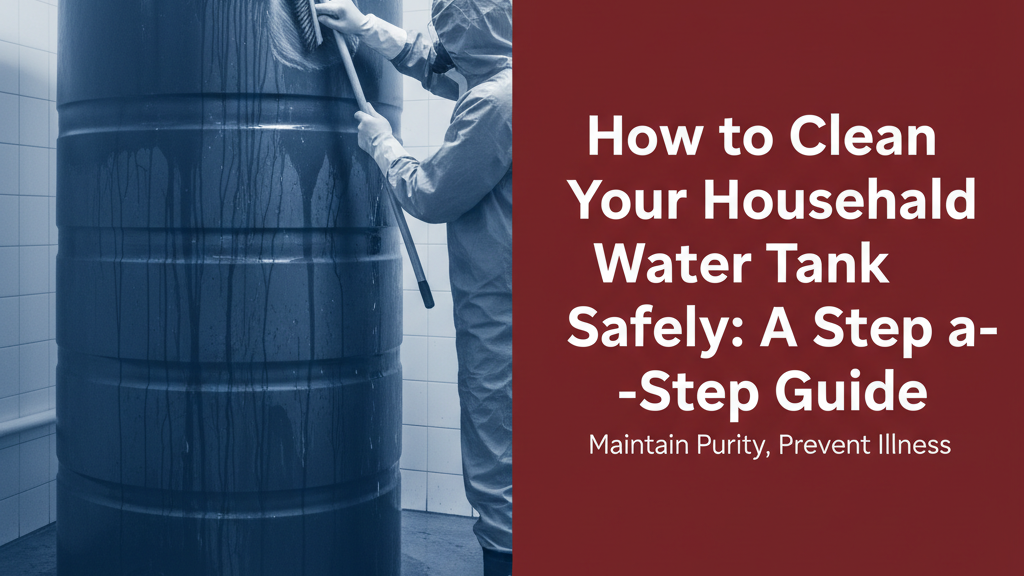
Why Regular Water Tank Cleaning is Essential
Over time, household water tanks accumulate sediments, algae, bacteria, and mineral deposits – particularly in India’s humid climate where temperatures above 30°C accelerate microbial growth. Unclean tanks may harbour pathogens like E.coli or Legionella, risking waterborne diseases. Cleaning maintains water quality and prevents:
- Foul odours and odd tastes in stored water
- Premature tank corrosion from biofilms
- Blockages in pipes due to sediment buildup
- Reduced water pressure as deposits narrow outlet pathways
Safety Precautions Before You Begin
Always prioritise safety when handling cleaning chemicals and confined spaces:
- Disconnect electrical pumps and seal wiring to prevent water ingress
- Wear rubber gloves, safety goggles, and a face mask if using chlorine
- Ensure proper ventilation if tank has a manhole cover
- Place warning signs to prevent accidental water use during cleaning
- Never mix cleaning agents (especially acids and chlorine)
Step-by-Step Guide to Cleaning Your Water Tank
Step 1: Drain the Tank Completely
Open the drain valve fully, using a bucket for residual water if needed. For overhead tanks, close the inlet valve 24 hours prior to minimise fresh water mixing with sediment.
Step 2: Remove Sediment and Debris
Use a plastic scraper or stiff brush (never metal tools that could scratch surfaces) to dislodge sludge from corners and base. Collect debris via a wet/dry vacuum if available.
Step 3: Scrub the Interior Surfaces
Prepare a mild solution of non-abrasive detergent and warm water (~40°C). Scrub all walls, lids, and fittings with a long-handled brush, paying attention to joints where biofilms form.
Step 4: Disinfect the Tank
For 1,000-litre tanks: Mix 50ml household bleach (4-6% sodium hypochlorite) in 5 litres of water. Apply solution to all surfaces and leave for 30 minutes – longer if visible algae is present.
Step 5: Rinse Thoroughly
Flush the tank with clean water 2-3 times until no bleach smell remains. For potable water tanks, a final rinse with boiled (then cooled) water eliminates residual chlorine taste.
Recommended Cleaning Solutions and Tools
| Purpose | Suitable Options | Avoid |
|---|---|---|
| Scrubbing | Nylon brushes, microfiber cloths | Steel wool, wire brushes |
| Disinfecting | Bleach, white vinegar, hydrogen peroxide | Strong acids, undiluted chlorine |
| Equipment | Plastic scrapers, extension rods | Metal tools that may scratch |
How Often Should You Clean Your Water Tank?
Most Indian households should clean tanks every 6 months, adjusting for:
- 3-4 months: Areas with high turbidity water or frequent power cuts (standing water stagnates faster)
- Annually: If using municipal-treated water with consistent supply
- Post-monsoon: Essential for open tanks exposed to leaf litter and insects
Signs Your Water Tank Needs Cleaning
Don’t wait for scheduled cleaning if you notice:
- Visible sediment or floating particles in drawn water
- A musty smell or metallic taste
- Slippery interior walls (bacterial biofilm)
- Unexplained gastrointestinal issues in household
Common Mistakes to Avoid
- Using excessive bleach: >100ppm chlorine leaves harmful byproducts
- Neglecting fittings: Valves and overflows harbour bacteria
- Incomplete drying: Moisture speeds up recontamination
- Ignoring the base: 70% of sediment settles in the bottom 15cm
Professional Cleaning vs DIY: Which is Best?
DIY cleaning works for:
- Smaller tanks (under 2,000 litres) with easy access
- Routine maintenance between professional services
Consider professionals when:
- Tank location makes manual cleaning risky (high rooftops, confined spaces)
- Persistent algal blooms or heavy corrosion occurs
- Complex systems with multiple interconnected tanks
Many Indian municipalities offer subsidised cleaning services – check local municipal corporation guidelines.