Understanding Urban Heat Islands
Urban heat islands (UHIs) occur when cities experience significantly higher temperatures than surrounding rural areas due to human activities and altered land surfaces. Concrete, asphalt, and dark roofing materials absorb and retain heat, creating microclimates that can be 3–12°C warmer than nearby vegetated areas. This phenomenon increases energy demands for cooling, worsens air pollution, and reduces outdoor comfort.
The Science Behind Rising Urban Temperatures
Three primary factors contribute to UHIs:
- Material properties: Conventional building materials like concrete have high thermal mass and low solar reflectance (albedo), absorbing up to 90% of incident solar radiation.
- Reduced vegetation: Cities lack trees and green spaces that provide shade and evaporative cooling.
- Anthropogenic heat: Vehicles, air conditioners, and industrial processes release waste heat into the urban environment.
How Surface Materials Affect Heat Absorption
The choice of exterior finishes directly impacts a building’s thermal performance:
| Material | Solar Reflectance (albedo) | Thermal Emittance |
|---|---|---|
| Standard grey concrete | 0.20–0.35 | 0.85–0.95 |
| Asphalt | 0.04–0.12 | 0.85–0.93 |
| White reflective coating | 0.70–0.85 | 0.85–0.90 |
Reflective Wall Putty: A Cooling Solution
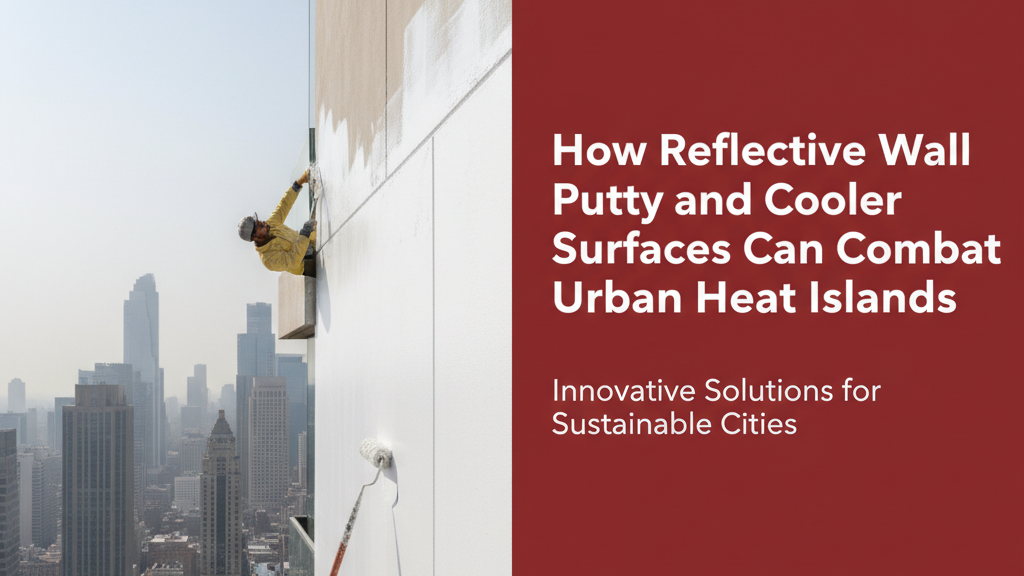
Modern heat-reflective wall putties incorporate special pigments and fillers that increase surface albedo while maintaining durability. When applied beneath paint, these formulations:
- Reflect up to 80% of visible and near-infrared sunlight
- Reduce surface temperatures by 5–15°C compared to conventional finishes
- Maintain consistent performance for 5–7 years with proper application
Benefits of Using Cooler Surface Materials
Beyond reducing UHI effects, reflective surfaces offer practical advantages:
- Energy savings: Buildings experience 10–30% reduction in cooling loads, lowering electricity consumption.
- Extended material life: Reduced thermal cycling decreases cracking and degradation of exterior finishes.
- Improved comfort: Walls stay cooler to the touch, making outdoor spaces more habitable.
Case Studies: Successful Urban Cooling Projects
Several Indian cities have implemented cool surface strategies:
- Ahmedabad: Cool roofs on over 3,000 low-income homes reduced indoor temperatures by 2–5°C.
- Hyderabad: Reflective coatings on municipal buildings decreased peak cooling demand by 18%.
Implementing Cool Roofs and Walls in Your City
Homeowners and builders can contribute to urban cooling through simple steps:
- Choose light-coloured or specially formulated reflective wall putties (ISI Mark certified)
- Specify cool roofing materials with minimum 0.65 solar reflectance
- Combine with passive cooling techniques like green walls and shade structures
Future Trends in Urban Heat Island Mitigation
Emerging solutions include phase-change materials (PCMs) in plasters, thermochromic coatings that adapt to sunlight intensity, and bio-based reflective compounds that further enhance sustainability credentials while maintaining performance.
| Surface Type | Ambient Air Temp | Surface Temp | Temp Difference |
|---|---|---|---|
| Dark grey concrete | 38°C | 62°C | +24°C |
| Reflective white coating | 38°C | 45°C | +7°C |