Introduction to High-Pressure HDPE Pipes
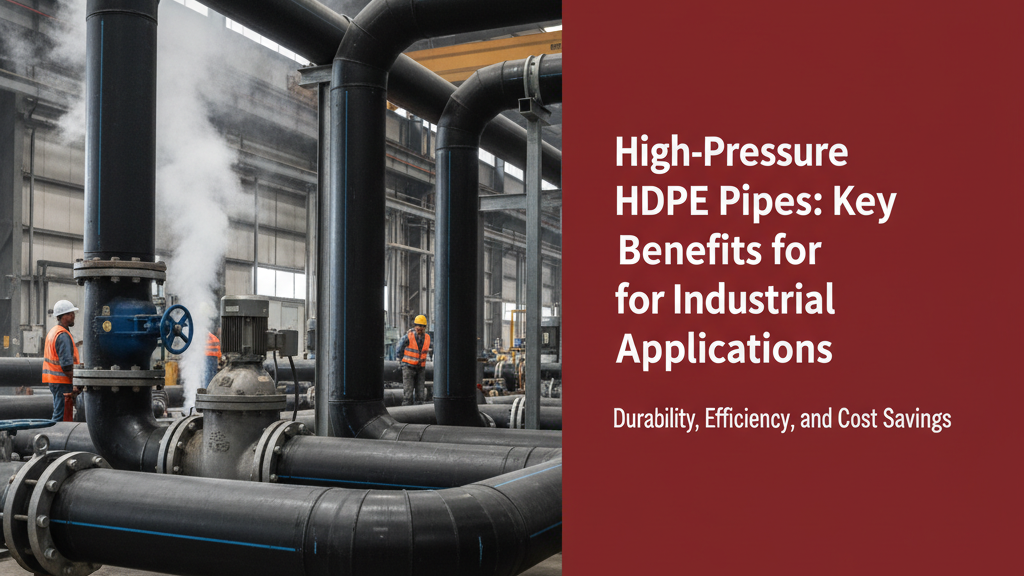
High-density polyethylene (HDPE) pipes have become a preferred choice for industrial applications requiring high-pressure resistance. Their unique material properties make them suitable for transporting fluids, chemicals, and gases under demanding conditions while ensuring long-term reliability.
What Makes HDPE Ideal for High-Pressure Applications
HDPE pipes are engineered to withstand pressures ranging from 6 to 25 bar, depending on the PN (pressure nominal) rating and wall thickness. Key advantages include:
- High tensile strength: Resists cracking or deformation under pressure
- Leak-free joints: Heat-fused connections create monolithic systems
- Pressure fatigue resistance: Maintains integrity through pressure fluctuations
Corrosion Resistance and Longevity
Unlike metal pipes, HDPE is inherently immune to:
- Electrochemical corrosion
- Rust
- Mineral deposits
This corrosion resistance gives HDPE pipes a typical service life of 50–100 years in industrial applications, with no need for protective coatings or cathodic protection.
Chemical Resistance in Harsh Environments
HDPE’s molecular structure provides exceptional resistance to:
| Chemical Type | Resistance Level |
|---|---|
| Acids (pH 1-6) | Excellent |
| Alkalis (pH 8-14) | Excellent |
| Salts | Excellent |
| Alcohols | Good |
Flexibility and Impact Resistance
HDPE pipes can withstand:
- Ground movements up to 5% elongation without failure
- Impact loads better than rigid materials (25 dB noise reduction versus metal pipes)
- Temperatures from -40°C to 60°C without becoming brittle
Cost-Effectiveness Over Traditional Materials
Total cost comparisons typically show 30–50% savings versus metals due to:
- Lower material costs per metre
- Reduced installation time (butt fusion takes 20–40% less time than welded steel)
- Minimal maintenance requirements
Ease of Installation and Low Maintenance
Installation best practices for high-pressure HDPE:
- Electrofusion or butt fusion joints create seamless connections
- No heavy machinery required for most diameters below 400mm
- No recurring costs for corrosion protection or lining replacement
Environmental Benefits of HDPE Pipes
HDPE contributes to sustainable industrial operations through:
- 100% recyclability (can be reprocessed 4–5 times without quality loss)
- Energy-efficient manufacturing (consumes 30% less energy than steel pipe production)
- Zero chemical leaching into transported fluids
Key Industries Benefiting from High-Pressure HDPE
Oil and Gas Sector Applications
Used for:
- Gas collection laterals (up to 10 bar working pressure)
- Produced water reinjection systems
- Corrosive fluid transfer
Water and Wastewater Management
Ideal for:
- High-pressure mains (PN16–PN25 rated)
- Chemical dosing lines