What Are Green Nets?
Green nets, also known as shade nets or garden netting, are woven or knitted synthetic fabrics designed to provide controlled shading, wind protection, and environmental management. Typically made from high-density polyethylene (HDPE) or polypropylene, these UV-stabilised nets come in various densities (measured as shade percentages) and colours, with green being a common choice for blending into natural landscapes.
Traditional Applications of Green Nets in Construction
In construction projects across India, green nets are frequently used for:
- Dust containment on scaffolding
- Safety barriers for falling debris
- Temporary windbreaks during high-rise work
- Sun protection for curing concrete
These applications leverage the nets’ durability (typically 3-5 years in harsh sunlight) and 40-75% porosity, which reduces wind load stress compared to solid barriers.
Beyond Construction: Green Nets in Landscaping
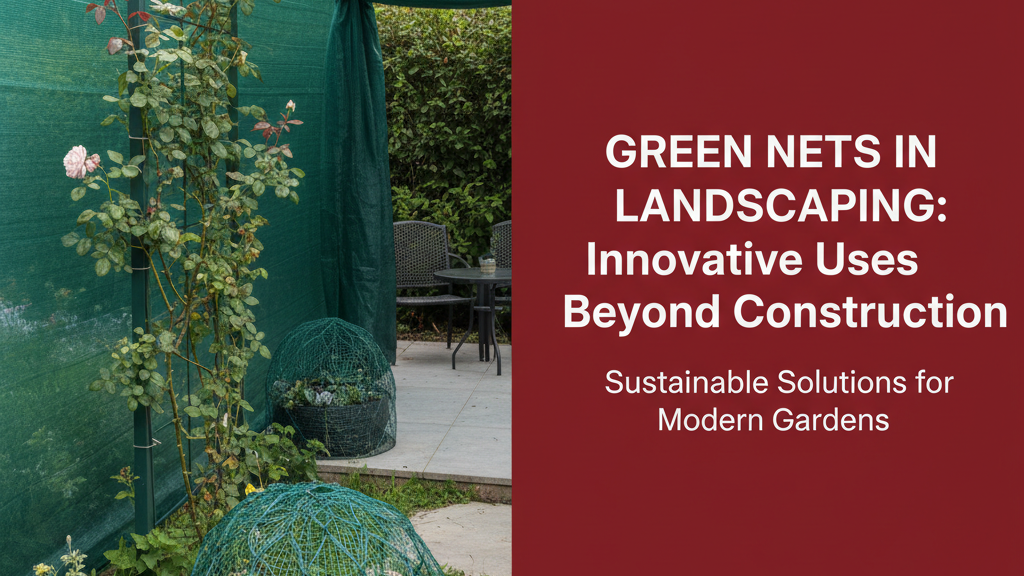
Landscapers are discovering innovative uses for green nets that extend far beyond their industrial origins:
- Vertical gardens: As lightweight support structures for climbing plants
- Nursery management: Regulating sunlight intensity for saplings
- Fruit protection: Shielding orchards from birds and hail
- Aquatic landscaping: Creating floating wetland barriers
Unlike traditional jute or coir netting, modern synthetic green nets resist fungal growth and maintain tensile strength even when wet – crucial for India’s monsoon conditions.
Creating Microclimates with Green Nets
Strategic placement of green nets can modify local environmental conditions by:
| Shade Percentage | Temperature Reduction | Ideal Use Case |
|---|---|---|
| 50-60% | 3-5°C | Herb gardens, ferns |
| 70-75% | 6-8°C | Orchids, shade-loving shrubs |
| 30-40% | 1-2°C | Seedling hardening areas |
This creates distinct growing zones within a single landscape, allowing cultivation of plants with different climate requirements side by side.
Green Nets for Erosion Control
On sloped landscapes (common in North Bengal’s tea gardens and Himalayan foothills), green nets serve as:
- Slope stabilisers: When anchored properly, 90gsm+ nets reduce soil displacement by 60-70% during heavy rains
- Seed germination aids: The open weave holds seeds in place while allowing water penetration
- Mulch anchors: Preventing organic mulch from washing away during irrigation
For best results, combine with jute mesh in high-erosion zones – the jute biodegrades as vegetation establishes, while the synthetic net provides longer-term protection.
Enhancing Biodiversity Through Green Nets
Ecologically sensitive installations demonstrate how green nets can support local ecosystems:
- Pollinator pathways: Creating shaded corridors for butterflies and bees between fragmented green spaces
- Artificial canopy layers: Mimicking forest understorey conditions for shade-loving insects
- Bird nesting support: Certain weave patterns allow birds to incorporate net fibres into nests
Select dark green or black nets to avoid disorienting nocturnal pollinators, and ensure proper tensioning to prevent entanglement hazards.
Choosing the Right Green Net for Your Project
Key selection criteria for landscaping applications:
- Material: UV-stabilised HDPE (lasts 4-7 years) vs. polypropylene (2-4 years)
- Shade factor: 30-90% density options – higher isn’t always better
- Colour: Dark green for visual blending, black for maximum UV resistance
- Mesh type: Knitted (more flexible) vs. woven (higher tensile strength)
For permanent installations, look for nets with reinforced edges and grommets spaced at 50cm intervals for secure fastening.
FAQs About Green Nets in Landscaping
Q: Can green nets replace traditional trellises?
A: For lightweight climbers like peas or morning glories, yes. For heavy vines (bougainvillaea, pumpkins), use as supplementary support to metal/wood structures.
Q: How do I clean accumulated dust from nets?
A: Gently spray with water using a garden hose every 2-3 months. Avoid high pressure that could distort the mesh.
Q: Are green nets safe for organic farming?
A: While chemically inert, some certification bodies may prefer biodegradable options. Check with your certifying agency.
Q: What’s the lifespan in coastal areas?
A: Salt spray reduces UV stabilisers’ effectiveness – expect 30-40% shorter lifespan than inland use.