Understanding Crop-Specific Drip Irrigation
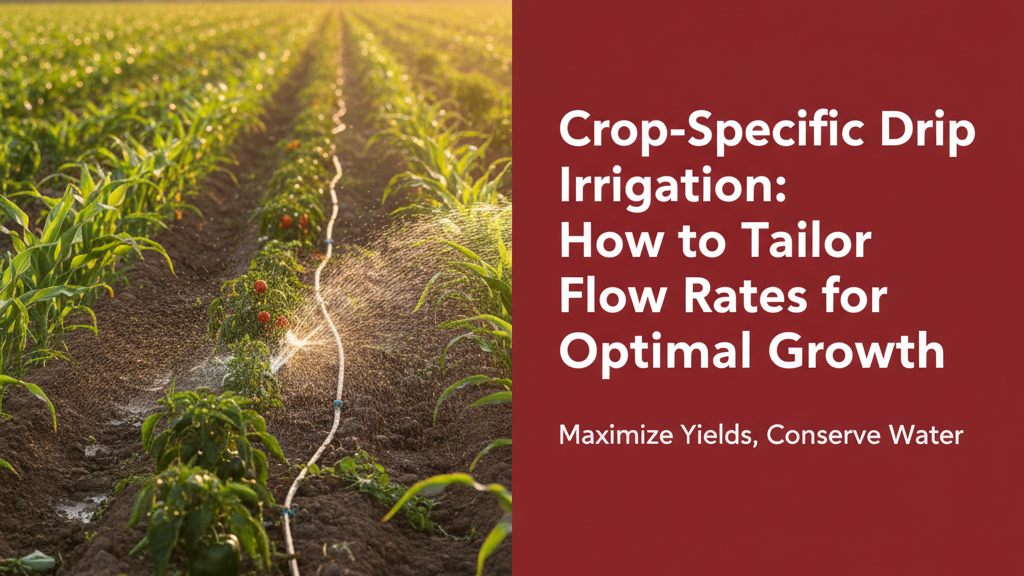
Drip irrigation, a method that delivers water directly to plant roots through a network of pipes and emitters, has revolutionised water use in agriculture. Crop-specific drip irrigation takes this further by adjusting flow rates to match the exact needs of different crops. Unlike traditional flood irrigation, this precision approach minimises water wastage while maximising plant health and yield.
Each crop type — from tomatoes to sugarcane — has unique water requirements during various growth stages. Drip systems can be calibrated to deliver litres per hour (LPH) based on root depth, soil type, and evapotranspiration rates, ensuring efficient nutrient uptake and reducing disease risks associated with overwatering.
Benefits of Tailoring Flow Rates
Customising drip irrigation flow rates offers measurable advantages for farmers:
- Enhanced Water Efficiency: Reduces consumption by 30–60% compared to conventional methods, critical in water-scarce regions
- Improved Crop Quality: Prevents under/overwatering stress, leading to uniform fruit size and higher marketable yields
- Fertiliser Optimisation: Enables fertigation with precise nutrient delivery matched to crop absorption rates
- Soil Health Preservation: Maintains ideal moisture levels, preventing erosion and salinisation common in flood irrigation
A study in Maharashtra’s grape orchards demonstrated a 22% yield increase after adopting flow rate-adjusted drip systems.
Key Factors Influencing Flow Rate Adjustments
Determining optimal flow rates requires analysing several variables:
| Factor | Consideration | Example |
|---|---|---|
| Crop Type | Water demand per growth phase (germination, flowering, fruiting) | Cotton: 6–8 LPH/plant during boll formation |
| Soil Texture | Infiltration rates and water-holding capacity | Clay soils require slower, longer irrigation than sandy soils |
| Climate | Evapotranspiration rates and rainfall patterns | 45–60 LPH/100m² in Rajasthan summers vs. 30 LPH in Kerala monsoons |
Emitter spacing (typically 30–60 cm) and operating pressure (1–2.5 bar) further fine-tune distribution uniformity.
Step-by-Step Guide to Customising Drip Irrigation
- Crop Water Requirement Analysis: Consult agricultural extension data or use lysimeters to determine daily crop evapotranspiration (ETc)
- Emitter Selection: Choose pressure-compensating (PC) or non-PC emitters based on field slope (e.g., PC emitters for hilly terrain)
- Flow Rate Calculation: Apply the formula:
Total Flow (LPH) = Plant Water Requirement (L/day) ÷ Irrigation Hours
- System Zoning: Group crops with similar water needs on separate valve-controlled lines
- Field Testing: Measure actual emitter output using graduated cylinders, adjusting pressure regulators as needed
For citrus groves, this might translate to 4 LPH emitters spaced at 50 cm, running for 2 hours daily in loam soil.
Common Mistakes to Avoid
Even well-designed systems underperform if these errors occur:
- Uniform Flow Assumptions: Using identical settings for young saplings and mature trees
- Clogging Neglect: Failing to install filters (120 mesh for sandy water sources) or flush lines monthly
- Pressure Mismanagement: Overlooking elevation changes requiring pressure-reducing valves
- Static Scheduling: Not adjusting for seasonal shifts in temperature/humidity
A Punjab case study showed 15% higher wheat yields simply by increasing winter irrigation frequency from weekly to bi-weekly.
Case Studies: Successful Implementation
1. Banana Plantations in Andhra Pradesh
By implementing 8 LPH drippers with daily 90-minute cycles (vs. 4 LPH for 3 hours), farmers achieved 18% water savings and reduced fungal infections from 12% to 3% incidence.
2. Polyhouse Capsicum Cultivation
Automated 2 LPH misting emeters maintained 80% relative humidity, boosting harvest frequency from 5 to 7 cycles annually.
Future Trends in Precision Irrigation
Emerging technologies are taking crop-specific irrigation further:
- IoT-Enabled Systems: Soil moisture sensors triggering irrigation only at defined depletion levels (e.g., 25% MAD)
- Variable Rate Drippers: Emitters that self-adjust flow based on real-time plant stress signals
- AI-Powered Scheduling: Machine learning models predicting water needs using weather forecasts and historical growth data
A Tamil Nadu pilot using multispectral imaging to guide drip schedules reduced water use by 40% in pomegranate farms.