
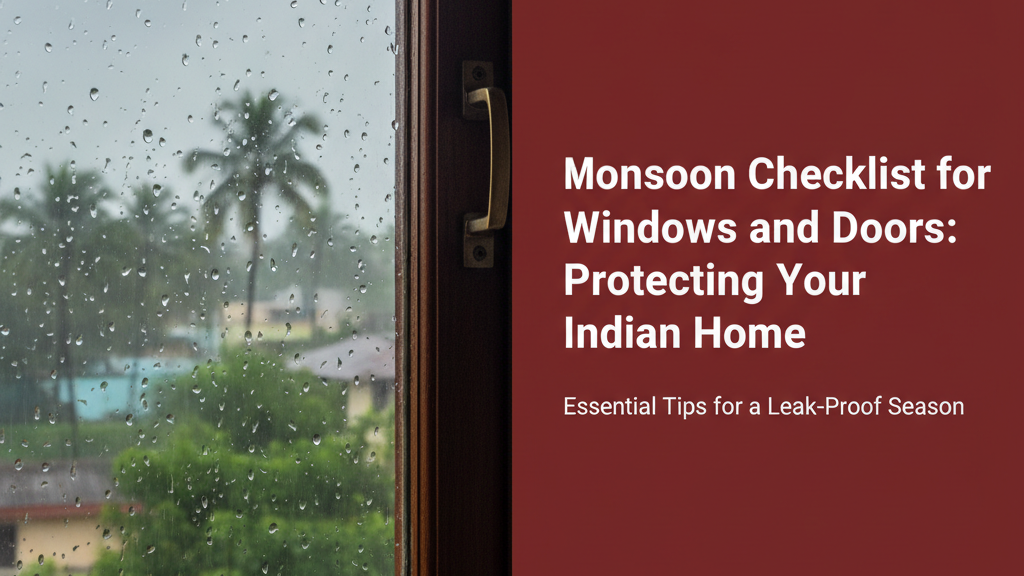
Why Monsoon-Proofing Matters
The Indian monsoon brings much-needed relief from summer heat, but it also tests every home’s defences against heavy rains, high humidity, and strong winds. Windows and doors – the most exposed elements of your home – require special attention to prevent water seepage, structural damage, and mould growth. Proper maintenance can extend their lifespan while keeping your interiors dry during months of relentless downpours.
Essential Checks for Windows
Begin your monsoon preparations by assessing all windows systematically:
- Frame condition: Check for cracks, warping, or peeling paint in uPVC, wood, or aluminium frames
- Glass integrity: Inspect for chips or cracks that may worsen under wind pressure
- Moving parts: Ensure smooth operation of sliding tracks, hinges, and opening mechanisms
Checking for Leaks and Gaps
A simple water test reveals vulnerabilities:
- Spray windows with a garden hose (simulating heavy rain)
- Observe interior surfaces for moisture penetration
- Mark leak points with chalk for targeted repairs
Common trouble spots include the meeting rail of sliding windows and corners of casement windows.
Testing Window Seals and Locks
Effective sealing prevents both water ingress and humid air penetration:
- Compression gaskets in uPVC windows should spring back when pressed – replace if brittle
- Multi-point locking systems help maintain uniform pressure on weatherstrips
- Check weep holes are clear to allow drainage of accumulated moisture
Key Door Maintenance Tasks
Doors face dual challenges during monsoons – horizontal rain exposure and ground-level water accumulation:
- Threshold clearances should be 6-12mm above floor level
- Bottom rails of wooden doors absorb moisture first – inspect for swelling
- uPVC doors benefit from inherent water resistance acumulación de agua: li>
- uPVC doors benefit from inherent water resistance but require frame checks
Examining Door Frames and Thresholds
A compromised frame allows water Pharmacy skipped text/homeProbe wooden frames for soft spots indicating rot
- Probe wooden frames for soft spots indicating rot
- Ensure metal frame anchors haven’t rusted through
- Verify threshold drainage channels slope away from the interior
Ensuring Proper Drainage Around Doors
Four critical drainage checks:
- Exterior door areas should slope at least 10mm per metre away from threshold
- Clear debris from drainage channels beneath sliding doors
- Extend roof overhangs above doors where possible
- Consider adding a weatherboard above doorways
Additional Protective Measures
Beyond repairs, proactive solutions enhance protection: