Understanding WPC Door Frames and Their Benefits
Wood-plastic composite (WPC) door frames have become a preferred choice for Indian homes due to their balanced properties. Combining wood fibres and thermoplastics, WPC offers moisture resistance that surpasses natural wood by 40–60% under monsoon conditions, with shrinkage rates below 0.5% even in 85% humidity. Unlike steel or aluminium, these frames maintain consistent thermal insulation (reducing heat transfer by 15–25% compared to metal alternatives) while resisting termites and fungal growth.
For design flexibility, WPC accepts:
- Through-body colouring in 120+ RAL shades
- Wood-grain embossing at 20–50 micron depths
- Matte, satin, or high-gloss finishes (60–90 GU measured at 60°) without warping
Popular Interior Design Styles and Their Characteristics
Modern and Minimalist Interiors
Clean lines and uncluttered spaces define this style, where WPC frames in neutral tones (RAL 9010 Pure White or RAL 7021 Dark Grey) align with flush doors and handle-less designs. Consider 100–120mm slim profiles with square edges to maintain visual simplicity.
Traditional and Classic Interiors
Ornate mouldings and warm tones characterise these spaces. WPC frames with wood-effect finishes like teak (RAL 1011 Brown Beige) or rosewood (RAL 8029 Pearl Copper) complement hand-carved doors. Opt for 150–200mm wider frames with raised panel detailing.
Industrial and Rustic Interiors
Exposed materials and textured surfaces work well with WPC frames mimicking weathered wood (RAL 8007 Fawn Brown) or containing recycled composite blends. Pair with metal-clad doors and visible mechanical fittings.
Scandinavian and Contemporary Interiors
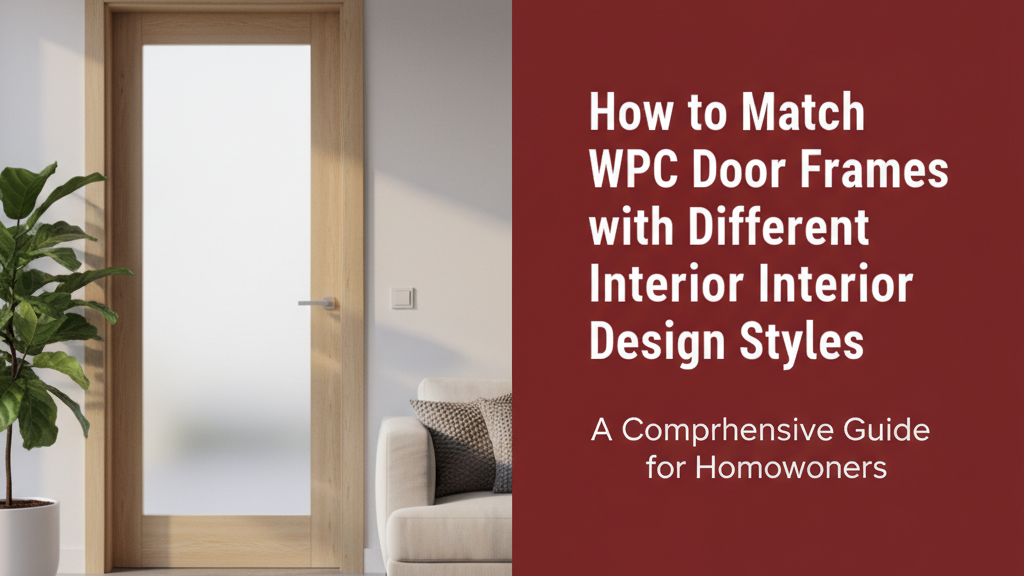
Light, airy spaces benefit from WPC in ash grey (RAL 7035) or light oak finishes with smooth, knot-free surfaces. Frosted glass doors with 45–60mm thin frames enhance the light-diffusing quality.
Choosing the Right WPC Door Frame for Each Style
| Style | Ideal Profile | Recommended Finish | Hardware Pairing |
|---|---|---|---|
| Modern | Slim square (100–120mm) | Solid colours with 30–40 GU matte finish | Concealed hinges, touch latches |
| Traditional | Wider (150mm+) with routed edges | Wood grain at 45–50° embossing angle | Brass lever handles |
| Industrial | Medium (120–140mm) with visible joins | Textured, low-sheen finishes | Black ironmongery |
| Scandinavian | Thin (45–60mm) rounded edges | Light wood tones with 10–15% grain visibility | Chromed tubular handles |
Colour and Finish Selection Tips
- Undertone matching: Align WPC colours with existing wood/stone elements (warm vs cool undertones)
- Light reflectance: High-gloss (70–90 GU) for contemporary spaces; matte (10–30 GU) for rustic looks
- Sample testing: Observe colour at different times of day – north-facing rooms need 20–30% lighter shades
- Contrast creating: Dark frames (RAL 8022 Black Brown) against white walls create dramatic focal points
Maintenance and Longevity of WPC Door Frames
Proper care ensures WPC frames retain their appearance for 15+ years in Indian conditions:
- Cleaning: Wipe with pH-neutral cleaner (6.5–8.5 pH) every 3 months; avoid abrasive pads
- Protection: Apply UV-resistant wax annually for outdoor-facing frames (blocks 95% of UVB rays)
- Inspection: Check silicone seals bi-annually for monsoon protection (replace at 3mm gap detection)
Note: WPC expands 0.8–1.2mm per metre at 40°C ambient temperature – ensure 5mm perimeter gaps during installation.
Final Thoughts on Harmonising WPC Frames with Your Decor
Successful integration of WPC door frames relies on understanding three principles:
- Scale proportion: Frame width should be 7–12% of the door’s total visual area
- Material continuity: Match frame textures with at least two other elements (furniture legs, ceiling beams)
- Transition planning: Use intermediary tones when transitioning between rooms with contrasting styles
With 60+ standard profiles and custom milling options, WPC frames adapt to heritage restoration projects or ultra-modern smart homes while requiring 70% less maintenance than natural wood.