Introduction to Wall Putty and Its Importance
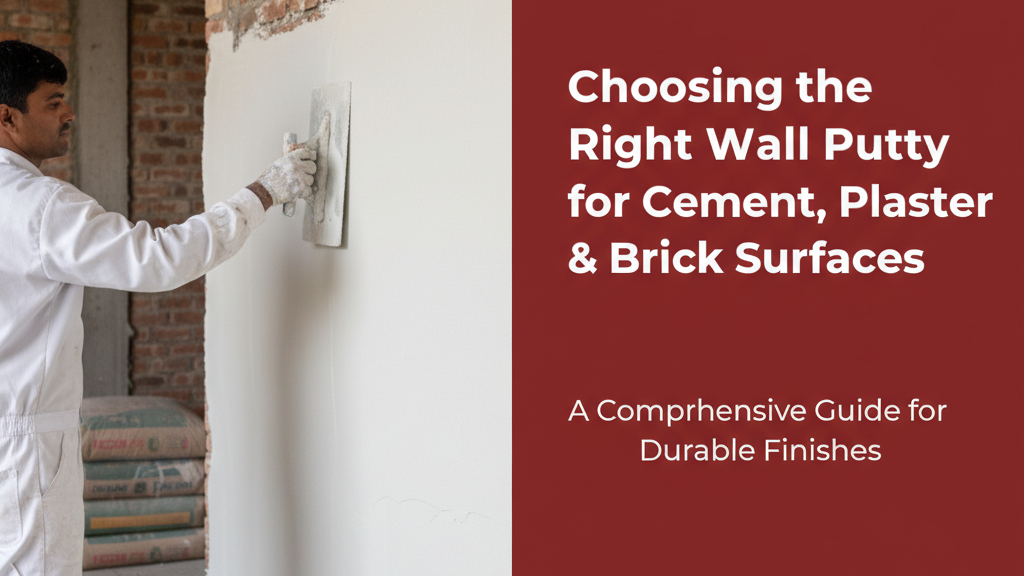
A smooth, blemish-free wall surface begins with proper preparation. Wall putty serves as the crucial intermediary layer between your wall substrate and the final paint or finish. It fills minor cracks, evens out porous surfaces, and improves paint adhesion—critical for achieving professional results in India’s variable climate conditions where humidity and temperature fluctuations can affect wall surfaces.
Modern acrylic-based wall putties offer distinct advantages:
- Better waterproofing than traditional white cement-based compounds
- Elasticity to accommodate minor thermal expansion (particularly useful for exterior surfaces facing direct sunlight)
- Resistance to efflorescence and alkali attack—common concerns with cement and brick substrates
Types of Wall Putty for Different Surfaces
The substrate determines the ideal putty formulation. Indian walls typically fall into three categories, each requiring specific characteristics:
| Surface Type | Key Requirements | Putty Characteristics |
|---|---|---|
| Cement surfaces | High alkalinity resistance, strong bonding | Polymer-modified with fine fillers (0.1-0.3mm particle size) |
| Plaster surfaces | Flexibility to handle minor shrinkage cracks | Elastic acrylic formulation with 300-500% elongation |
| Brick surfaces | Deep pore penetration, moisture regulation | Higher solids content (75-80%) with breathable polymers |
Best Wall Putty for Cement Surfaces
Cement walls present unique challenges—their highly alkaline nature can degrade standard putties over time. An optimal cement wall putty should:
- Withstand pH levels up to 13 (typical of fresh cement)
- Exhibit bond strength exceeding 0.5 N/mm² as per IS 1542 standards
- Contain anti-fungal additives for humid coastal or monsoon-prone areas
Application tip: Allow new cement walls to cure for at least 21 days before putty application. The carbonation process reduces surface alkalinity gradually—testing with phenolphthalein solution (pink colour indicates high pH) helps determine readiness.
Best Wall Putty for Plaster Surfaces
Plastered walls often develop hairline cracks due to shrinkage during curing. A quality plaster wall putty should:
- Maintain flexibility after curing (minimum 2-3% elongation)
- Have low shrinkage properties (<0.5% volumetric change)
- Provide uniform porosity to match the plaster substrate’s breathability
For gypsum plaster surfaces, verify putty compatibility—some formulations react with calcium sulfate. A thin test patch (1 sq. ft) observed for 48 hours can prevent adhesion failures.
Best Wall Putty for Brick Surfaces
Brick walls require putties that can handle irregular surfaces and varying absorption rates. Key considerations:
- Higher application thickness (1.5-2mm vs 0.8-1mm for smooth surfaces)
- Moisture-regulating properties to prevent efflorescence salt migration
- Aggregates sized to fill typical brick surface voids (0.5-1mm range)
For historic brickwork or porous clay bricks, consider a priming coat of diluted putty (30% water) to seal the surface before full application. This prevents rapid moisture absorption that can lead to putty drying cracks.
Application Tips for Different Surfaces
Surface preparation accounts for 70% of putty performance. Follow this checklist:
Cement surfaces
- Remove loose particles with wire brush or scraper
- Apply corrosion-resistant primer if steel reinforcements are exposed
- Use stainless steel trowel to prevent rust staining
Plaster surfaces
- Lightly sand to remove trowel marks
- Mist with water 1 hour before application to control absorption
- Apply in two thin coats (0.5mm each) with 6-hour drying intervals
Brick surfaces
- Remove mortar droppings with chisel
- Seal deeply eroded joints with repair mortar first
- Apply putty in criss-cross motions to ensure pore filling
Common Mistakes to Avoid When Applying Wall Putty
- Mixing inconsistencies: Adding water unevenly creates weak spots. Use mechanical mixers for batches over 5kg.
- Wrong timing: Applying putty to damp surfaces or before previous coats fully cure (typically 6-8 hours at 30°C).
- Over-troweling: Excessive smoothing brings excess water to the surface, causing shrinkage cracks.
- Climate neglect: Applying below 10°C or during rains slows curing, while temperatures above 40°C may cause rapid drying cracks.
Pro tip: Track application conditions with a simple hygrometer—ideal is 25-35°C with 60-70% relative humidity.
Conclusion: Selecting the Perfect Wall Putty
Choosing wall putty isn’t about finding a universal solution, but matching formulation strengths to your specific surface challenges. Consider these final pointers:
- For high-traffic areas, prioritize putties with >200 scrub resistance cycles
- In coastal regions, verify salt spray resistance certifications
- North-facing walls benefit from putties with mild fungicidal properties
The right putty acts as insurance—it prevents recurring maintenance while ensuring your final paint or finish achieves its maximum lifespan and aesthetic potential.