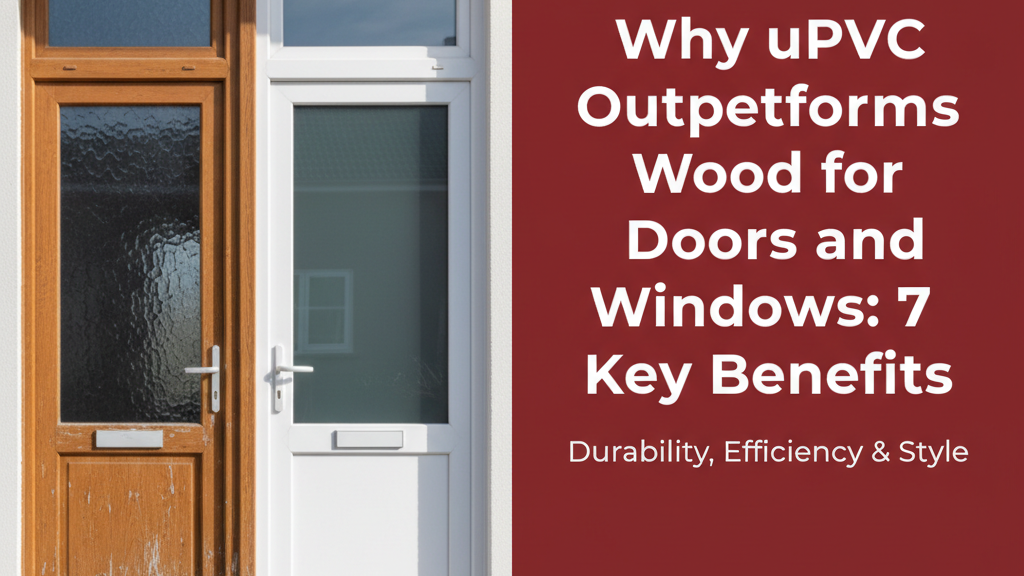
Introduction to uPVC and Wood Materials
When selecting materials for doors and windows, homeowners and builders in India often weigh the merits of traditional wood against modern uPVC (unplasticised polyvinyl chloride). Both materials have distinct characteristics that influence durability, maintenance, energy efficiency, and aesthetics under Indian conditions.

Advantages of uPVC Over Wood
uPVC has emerged as a preferred choice for contemporary Indian homes due to several inherent advantages:
- Superior resistance to India’s humid monsoon climate
- Elimination of seasonal warping and swelling
- Inherent immunity to termites and wood-boring insects
- Consistent performance across temperature extremes (0°C to 50°C)
Durability and Longevity
Where wooden frames typically require replacement every 8-12 years in Indian conditions, quality uPVC systems demonstrate:
| Factor | uPVC | Wood |
|---|---|---|
| Expected lifespan | 25-35 years | 8-15 years |
| Moisture resistance | Impervious | Prone to swelling/rotting |
| UV degradation | UV-stabilised formulations resist fading | Requires periodic varnishing |
Low Maintenance Requirements
uPVC eliminates several maintenance burdens associated with wooden frames:
- No seasonal repainting or varnishing needed
- Cleanable with mild soap solution
- No polishing or anti-termite treatments required
- Colour consistency throughout the profile (no surface coatings)
Energy Efficiency Comparison
Multi-chambered uPVC profiles outperform wood in thermal insulation:
- Thermal conductivity of 0.16 W/mK vs wood’s 0.13-0.18 W/mK
- Eliminates air gaps through precision-engineered gaskets
- Maintains consistent insulation properties over time
Testing indicates uPVC windows can reduce heat transfer by 18-22% compared to untreated wooden frames in Indian summer conditions.
Security Features
Modern uPVC systems incorporate several security advantages:
- Multi-point locking systems (typically 3-5 points)
- Reinforced steel cores within profiles
- Impact-resistant glazing options
- No material weakening from moisture absorption
Cost-Effectiveness Over Time
While initial costs may appear comparable, uPVC demonstrates superior long-term value:
- Eliminates recurring maintenance expenses
- No replacement costs for 2-3 decades
- Energy savings from improved insulation
- Higher residual value for properties
Aesthetic Versatility
Contemporary uPVC systems offer diverse design options:
- Wood-grain finishes mimicking teak or oak
- Colour-fast options in whites, browns, and greys
- Consistent appearance without weathering variations
- Sleek modern profiles for contemporary architecture
Environmental Considerations
uPVC presents several ecological advantages:
- Long lifespan reduces material consumption
- 100% recyclable at end of life
- No deforestation impact
- Lower embodied energy than aluminium alternatives
Frequently Asked Questions
Does uPVC warp in extreme heat?
Quality uPVC formulations are stabilised for temperatures up to 50°C without deformation.
Can uPVC windows match traditional wooden aesthetics?
Modern wood-effect finishes convincingly replicate grain patterns while maintaining uPVC’s benefits.
How does sound insulation compare?
Multi-chamber uPVC profiles typically achieve 30-35 dB noise reduction, outperforming single-pane wooden windows.