Introduction to Sustainable Farming Practices
Sustainable farming has become imperative in India’s agricultural landscape, where water scarcity and erratic monsoons challenge traditional practices. Integrating modern irrigation techniques with traditional water conservation methods offers a practical solution to maintain crop yields while reducing environmental impact.
Understanding Drip Irrigation Systems
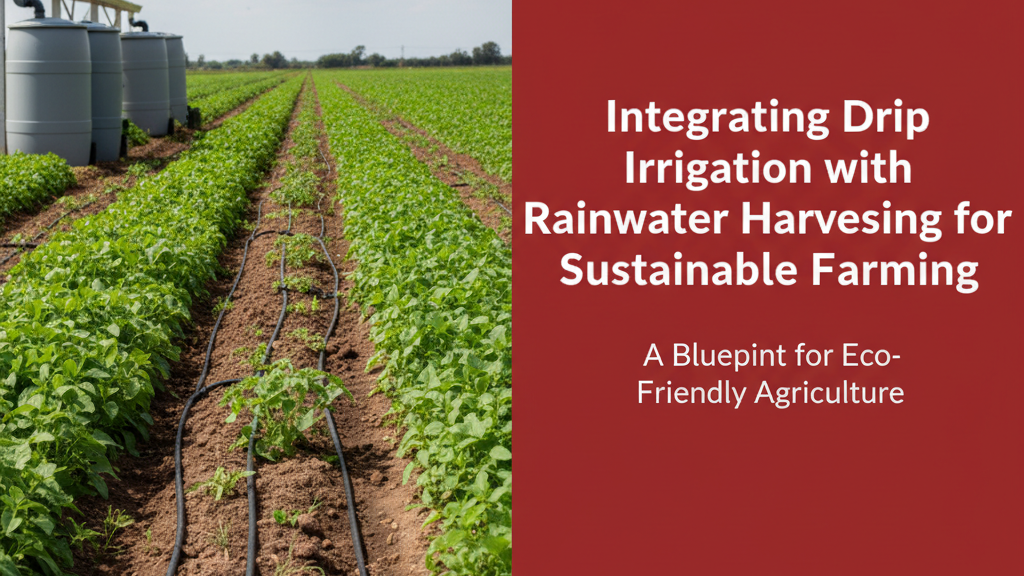
Drip irrigation delivers water directly to plant roots through a network of HDPE or PVC pipes, tubes, and emitters. Unlike flood irrigation, it minimises water waste through:
- Precision delivery (60-90% water savings vs conventional methods)
- Reduced evaporation (especially critical in India’s 35-45°C summer heat)
- Compatibility with fertiliser injection (fertigation)
Properly installed systems with ISI-marked components can last 10-15 years with scheduled cleaning to prevent emitter clogging from sediment or algae.
The Role of Rainwater Harvesting in Agriculture
Rainwater harvesting captures monsoon runoff for dry-season irrigation through:
- Surface storage (farm ponds, tanks with 1-3% slope gradient)
- Subsurface recharge (percolation pits, recharge wells)
- Rooftop collection (for small farms, using PVC gutters)
A 1000m² catchment area in high-rainfall zones (e.g., 2500mm annual rainfall) can yield ~2.5 million litres annually – sufficient for 1 acre of drip-irrigated vegetables.
Benefits of Combining Drip Irrigation with Rainwater Harvesting
| Parameter | Standalone Drip | With Rainwater Harvesting |
|---|---|---|
| Water source reliability | Dependent on groundwater | Dual source (rain + groundwater) |
| Water quality | May contain salts/minerals | Softer rainwater reduces emitter scaling |
| Energy use | Constant pumping needed | Gravity-fed options possible |
Step-by-Step Guide to Integration
- Assess water needs: Calculate crop water requirement (mm/day) and plot topography
- Design storage: Size rainwater tanks/ponds based on local rainfall data and irrigation demand
- Install filtration: Use sand/gravel filters before drip systems (150-200 mesh)
- Connect systems: Link storage to drip network via HDPE header pipes (63mm-90mm)
- Add control valves: Install check valves and pressure regulators (1.0-1.5 bar optimal)
Best Practices for Maintenance and Efficiency
- Pre-monsoon: Clean tank inlets, check first-flush diverters
- Monthly: Flush drip lines, inspect emitters (flow variance >10% indicates clogging)
- Quarterly: Acid clean systems (pH 2-3 solution for 30 mins) to dissolve mineral deposits
- Annual: Pressure test pipelines (1.5x operating pressure for 1 hour)
Case Studies: Successful Implementations
Case 1: A West Bengal vegetable farm increased yield by 22% while reducing groundwater use by 65% after integrating 25,000-litre ferrocement tanks with drip irrigation.
Case 2: Kerala coconut growers reduced salt stress in coastal soils by blending harvested rainwater (EC 0.3 dS/m) with borewell water (EC 2.1 dS/m).
Challenges and Solutions
- High initial cost: Government subsidies (up to 50% under PMKSY)
- Mosquito breeding: Cover tanks with mesh (<1mm gaps) or use biological controls
- Algae growth: Paint storage tanks in dark colours to limit sunlight penetration
Future of Sustainable Farming with Integrated Systems
Emerging innovations include soil moisture sensors triggering automated irrigation from rainwater stores, and AI-powered systems that predict water needs based on weather forecasts. These technologies could reduce water use by another 15-25% compared to current integrated setups.
Conclusion and Key Takeaways
The synergy between drip irrigation and rainwater harvesting addresses India’s twin challenges of water scarcity and agricultural productivity. While requiring careful planning and maintenance, integrated systems demonstrably improve water-use efficiency, crop quality, and farm resilience—critical factors as climate variability increases.