
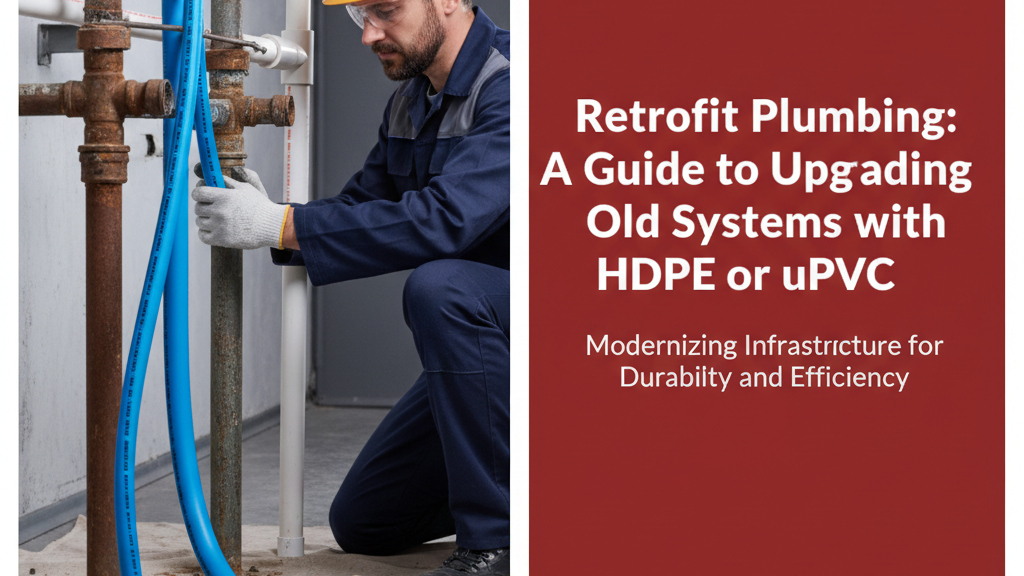
Introduction to Retrofit Plumbing
Older plumbing systems, particularly those using galvanised steel or ageing PVC, often suffer from corrosion, leaks, and reduced water pressure. Retrofit plumbing—replacing sections or the entire network with modern materials like HDPE or uPVC—offers a durable, cost-effective solution without requiring complete demolition. This guide explores how these materials perform in Indian conditions (high humidity, hard water, temperature fluctuations) and provides practical steps for upgrading your system.
Understanding HDPE and uPVC for Retrofit Plumbing
HDPE (High-Density Polyethylene): A flexible, high-impact plastic resistant to chemicals and abrasion. Ideal for underground/outdoor applications due to UV stability and jointing methods like butt fusion, which eliminate weak points.
uPVC (Unplasticised Polyvinyl Chloride): A rigid, lightweight material with smooth inner walls for consistent flow. Preferred for indoor supply lines and drainage due to its fire-retardant properties and ease of solvent welding. Both materials meet ISI/BIS standards for potable water.
Advantages of Using HDPE for Retrofit Plumbing
- Leak-Free Joints: Fusion welding creates seamless connections, reducing failure risks by 80–90% compared to threaded metal joints.
- Durability: Resists scale buildup and corrosion, even in hard water (common in North India), with a lifespan exceeding 50 years.
- Flexibility: Can bend around obstacles during retrofits without additional fittings, reducing labour costs.
- Earthquake Resistance: Absorbs ground movement better than rigid pipes, critical in seismic zones like Siliguri.
Advantages of Using uPVC for Retrofit Plumbing
- Lower Cost: 15–20% cheaper than HDPE for indoor applications, with widely available fittings.
- Ease of Installation: Lightweight and cuttable with hand tools; solvent cement joints cure in 2–4 hours.
- Hygienic: Non-reactive with chlorine or acidic water, maintaining water quality (certified to IS 4985).
- Thermal Insulation: Reduces condensation in humid climates, preventing exterior ‘sweating’ common in metal pipes.
Comparing HDPE and uPVC for Retrofit Projects
| Factor | HDPE | uPVC |
|---|---|---|
| Best For | Underground mains, outdoor runs, seismic zones | Indoor supply lines, drainage, tight budgets |
| Temperature Range | -40°C to 60°C | 0°C to 45°C (avoid direct sunlight) |
| Jointing Method | Butt/electrofusion welding (specialised tools) | Solvent cement (DIY-friendly) |
| Pressure Rating | PN6–PN16 (high-pressure capable) | PN10–PN12 (standard household use) |
Step-by-Step Guide to Retrofit Plumbing with HDPE or uPVC
- Assessment: Map existing pipes, noting material, diameter, and leak points. Check local water pressure (typically 2–4 bar).
- Material Selection: Choose HDPE for buried lines or high-flex zones, uPVC for indoor replacements.
- Preparation: Shut off water, drain old pipes, and clear workspace. For HDPE, rent a fusion machine if needed.
- Installation:
- HDPE: Cut pipes square, clean surfaces, and fuse per manufacturer’s heat/time settings.
- uPVC: Deburr cut ends, apply primer/cement, and hold joints firmly for 30 seconds.
- Testing: Pressurise system to 1.5× operating pressure for 2 hours to check for leaks.
Common Challenges and Solutions in Retrofit Plumbing
- Obstructed Pathways: Use HDPE’s flexibility to snake around beams or choose uPVC’s modular fittings for tricky angles.
- Mixed Materials: Transition from metal to plastic using brass adapters with rubber gaskets (ensure compatibility with chlorinated water).
- Incorrect Sizing: Match inner diameters to maintain flow rates—common swaps: ½” galvanised → 20mm uPVC, ¾” steel → 25mm HDPE.
- Monsoon Flooding: Seal HDPE entry points with waterproof Epoxy putty to prevent silt infiltration.
Conclusion: Making the Right Choice for Your Plumbing Upgrade
Retrofitting with HDPE or uPVC balances long-term performance with practical constraints. For homes with frequent ground shifts or outdoor needs, HDPE’s durability excels. Budget-conscious indoor projects benefit from uPVC’s simplicity. Both materials outperform ageing metal systems in India’s climate, reducing maintenance while ensuring safe water delivery.