Introduction
Wooden windows have been a traditional choice in Indian homes for decades, but time and weather take their toll. If your windows are showing signs of wear, it may be more cost-effective to replace them than to keep repairing them. uPVC windows offer a durable, low-maintenance alternative that performs well in India’s humid, dusty, and monsoon-prone conditions. Here are eight clear signs your wooden windows need replacing—and why uPVC could be the solution.
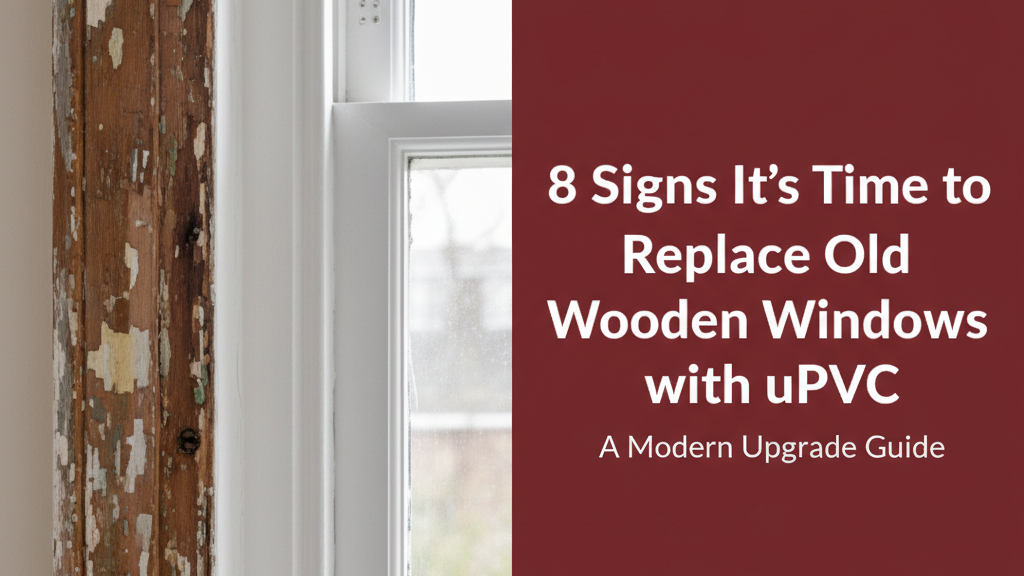
1. Visible Rot and Decay
The most obvious sign your wooden windows need replacing is visible rot, warping, or termite damage. Unlike uPVC, wood is susceptible to:
- Fungal growth in humid climates (common in North Bengal and coastal regions)
- Termite infestations that compromise structural integrity
- Paint peeling that exposes untreated wood to moisture
Small patches can sometimes be repaired, but widespread decay usually means replacement is more economical long-term.
2. Drafty Windows Increasing Energy Bills
If you feel air leaks around closed windows or notice rising cooling/heating costs, your wooden frames likely have:
- Shrunken joints from repeated drying cycles
- Gaps where seals have degraded
- Poor insulation compared to multi-chamber uPVC profiles
uPVC windows with EPDM gaskets maintain consistent seals, reducing energy loss by an estimated 15-30% compared to aged wood.
3. Difficulty Opening and Closing
Sticking windows aren’t just frustrating—they indicate underlying frame damage. Common causes include:
- Swollen wood during monsoon season
- Misaligned frames from foundation shifts
- Rusted hardware on older windows
uPVC frames resist swelling and won’t corrode, ensuring smooth operation year-round.
4. Excessive Maintenance Requirements
Wood demands regular upkeep that uPVC eliminates:
| Maintenance Task | Wooden Windows | uPVC Windows |
|---|---|---|
| Repainting | Every 2-3 years | Never required |
| Weatherproofing | Annual sealing | Built-in gaskets |
| Pest treatment | Regular chemical applications | Not applicable |
5. Condensation Between Panes
Foggy glass indicates failed seals in double-glazed units—a problem requiring full replacement since the insulated glass unit (IGU) can’t be repaired. Modern uPVC windows use:
- Desiccant-filled spacer bars to absorb moisture
- Dual or triple glazing options for better insulation
- Thermally broken frames to reduce condensation
6. Outdated Aesthetic Impacting Property Value
Peeling paint and old-fashioned designs make homes look dated. uPVC windows offer:
- Contemporary slimline profiles
- Wood-grain finishes without maintenance
- Customisable colours to match façades
Realtors note that modern windows can increase resale value by 3-5% compared to deteriorated wooden frames.
7. Noise Pollution from Outside
If traffic noise has become intrusive, your wooden frames likely lack soundproofing. uPVC windows reduce noise through:
- Multi-chamber profiles that dampen vibrations
- Thicker glazing options (up to 6mm laminated glass)
- Tighter seals that block airborne sound
Testing shows noise reduction of 25-35 dB compared to single-pane wooden windows.
8. Security Concerns with Weak Frames
Compromised wooden frames pose safety risks because:
- Rot weakens the structure around locking points
- Single-pane glass is easier to break
- Older designs may lack modern locking systems
uPVC windows feature:
- Reinforced frames that resist forced entry
- Multi-point locking mechanisms
- Toughened or laminated glass options
Why uPVC is the Ideal Replacement
For Indian homes, uPVC windows outperform wood by addressing climate challenges while reducing lifetime costs:
- Durability: Resists humidity, termites, and UV degradation
- Energy efficiency: Better insulation lowers AC/heating loads
- Low maintenance: No painting or sealing required
- Customisation: Available in colours and finishes to suit any architecture
- Longevity: Typical lifespan of 25+ years with minimal upkeep
Conclusion
While wooden windows have nostalgic appeal, modern uPVC systems solve their functional shortcomings. If your windows exhibit multiple issues from this list, replacement with uPVC could improve your home’s comfort, security, and energy efficiency while reducing long-term maintenance burdens. The initial investment often pays for itself through energy savings and avoided repair costs within 5-7 years.