
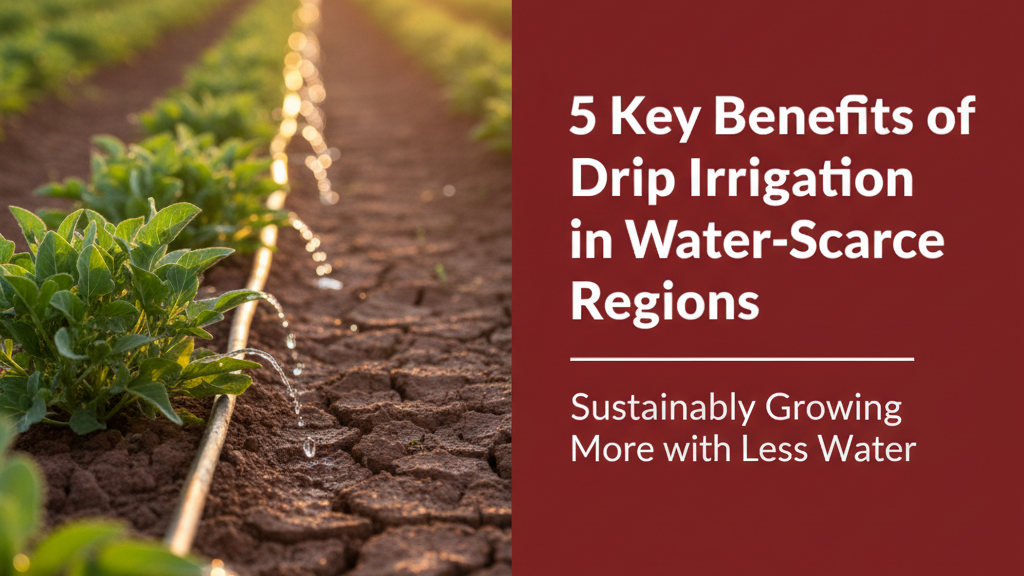
Introduction to Water Scarcity and Irrigation Challenges
In many parts of India, particularly arid and semi-arid regions, water scarcity poses a significant challenge to agricultural productivity. Traditional flood irrigation methods often lead to substantial water wastage through evaporation, runoff, and inefficient distribution. As groundwater levels decline and rainfall patterns become unpredictable, farmers require smarter solutions to maintain crop yields while conserving this precious resource.
How Drip Irrigation Works
Drip irrigation delivers water directly to plant roots through a network of pipes, tubes, and emitters. Unlike conventional methods that wet entire fields, this system applies water slowly and precisely where it’s needed most. Key components include:
- Mainlines and sub-mains (typically HDPE pipes for durability)
- Drip lines with pressure-compensating emitters
- Filters to prevent clogging
- Control valves and fertigation equipment
The system operates at low pressure (1-2 bar), reducing energy requirements while maintaining uniform water distribution across varying terrain.
Key Benefits of Drip Irrigation
Water Conservation with Drip Systems
Drip irrigation achieves 90-95% water use efficiency compared to 60-70% with flood irrigation. By eliminating surface runoff and minimising evaporation losses, farmers in water-scarce regions can:
- Reduce water consumption by 30-50% for most crops
- Maintain optimal soil moisture without waterlogging
- Operate systems during cooler hours to further reduce evaporation
Improved Crop Yields and Quality
Precise water delivery promotes healthier plant growth through:
- Consistent moisture levels preventing stress cycles
- Better nutrient uptake when combined with fertigation
- Reduced disease incidence by keeping foliage dry
Field trials show yield increases of 20-90% for crops like tomatoes, cotton, and sugarcane compared to flood irrigation.
Reduced Soil Erosion and Nutrient Loss
The gentle application of water prevents:
- Topsoil displacement common with flood irrigation
- Leaching of nitrogen and other mobile nutrients
- Salt accumulation in root zones through controlled leaching
Lower Labour and Operational Costs
Once installed, drip systems require minimal manual intervention:
- Automation reduces daily watering labour by 50-70%
- Lower energy costs than sprinklers (operates at 1/3 the pressure)
- Reduced weeding (water only reaches crop roots)
Adaptability to Various Terrains and Crops
Drip systems perform well in challenging conditions where other methods fail:
- Sloping land (prevents runoff)
- Sandy soils (high infiltration rates)
- High-value crops (vegetables, fruits, flowers)
- Widely spaced plants (orchards, vineyards)
Implementing Drip Irrigation in Arid Regions
Successful adoption requires careful planning:
- Water source assessment: Calculate available flow rate and quality
- System design: Match emitter spacing and flow to crop needs
- Filtration: Sand/media filters for open water sources
- Maintenance: Regular flushing and acid treatments
In saline conditions, drip irrigation actually helps by continuously moving salts to the edges of the wetted zone.
Case Studies: Success Stories from Water-Scarce Areas
Rajasthan: Cotton farmers in Jalna district achieved 45% water savings and 22% higher yields with drip irrigation despite receiving only 550mm annual rainfall.
Maharashtra: A grape grower in Nashik reduced water use from 8,000 to 3,500 litres per vine annually while improving fruit quality for export markets.
Overcoming Common Challenges
Addressing frequent concerns:
- Clogging: Use proper filtration and periodic flushing
- Initial cost: Subsidies available under PMKSY; payback in 2-3 seasons
- Rodent damage: Bury laterals or use thicker-walled drip lines
Future of Drip Irrigation Technology
Emerging innovations include:
- Solar-powered automated systems
- Soil moisture sensor integration
- Biodegradable drip tapes
- AI-based scheduling apps
Conclusion: Sustainable Solutions for Water Scarcity
Drip irrigation represents one of the most effective tools for maintaining agricultural productivity in India’s water-stressed regions. By combining significant water savings with yield improvements and operational efficiencies, this technology helps secure farmer livelihoods while conserving groundwater resources for future generations.