Introduction to Green Nets
Green nets, also known as shade nets or garden netting, have become versatile tools for both home and garden applications. Made from high-density polyethylene (HDPE) or other durable materials, these nets offer sustainable solutions while being lightweight, UV-stabilised, and resistant to rot. Their knitted or woven structures provide flexibility for various DIY projects without compromising on durability.

DIY Uses for Green Nets in Gardens
Indian gardening conditions—from intense sun to monsoon rains—make green nets particularly useful. These applications go beyond basic plant protection:
Creating Shade for Plants
Use 50%-75% density green nets to diffuse sunlight for:
- Delicate seedlings that require indirect light exposure
- Orchids or ferns needing humidity retention under partial shade
- Herb gardens prone to leaf scorch in afternoon heat (40-50°C regions)
Protecting Crops from Pests
A 20-30 mesh size effectively deters:
- Fruit flies from attacking mango or guava trees
- Sparrows and parrots from pecking at vegetable patches
- Caterpillars when draped directly over cabbage or cauliflower
Ensure proper tensioning with bamboo frames to prevent net sagging during heavy rains.
DIY Uses for Green Nets at Home
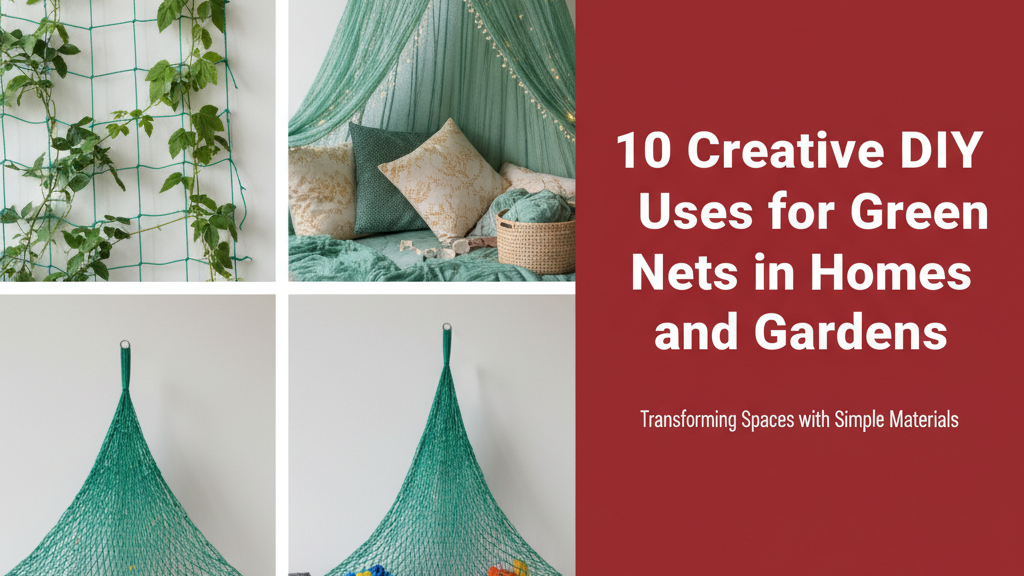
Creating a Vertical Garden
For balcony or boundary walls:
- Fix eye bolts every 60 cm along a brick or RCC wall
- Attach rigid green net (120 GSM minimum) with rust-proof cable ties
- Hang coco-peat pots or recycled containers through the gaps
The open weave allows irrigation drainage while supporting creepers like money plants.
Making a Pet Barrier
To safely confine dogs or cats without obstructing airflow:
- Use 10 mm knot spacing nets along veranda railings
- Secure with PVC-coated steel wires for chew resistance
- Install at 45° angles to prevent climbing attempts
Maintenance and Care Tips for Green Nets
Extend functional lifespan with these practices:
| Issue | Prevention |
|---|---|
| Monsoon algae growth | Monthly vinegar-water spray (1:3 ratio) |
| UV degradation | Store unused nets in shade; rotate exposed sections biannually |
| Wind stress tears | Reinforce edges with folded hems and grommets every 1 metre |
Note: HDPE-based green nets typically maintain 70-80% tensile strength for 3-5 years in tropical climates if cleaned quarterly.
Where to Buy Quality Green Nets
Opt for ISI-marked green nets with these specifications:
- UV stabiliser content exceeding 2% for long-term outdoor use
- Knitted (not welded) construction for flexibility
- GSM between 80-150 for most home/garden applications
Verify the net’s material composition—some manufacturers blend recycled content without proper stabilisation, leading to premature brittleness.