
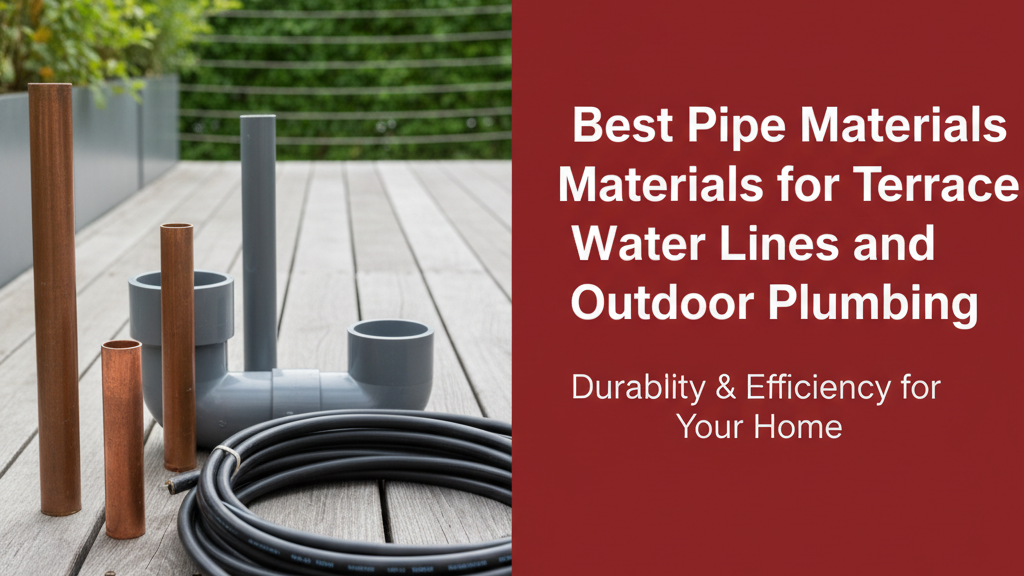
Introduction to Outdoor Plumbing Needs
Installing water lines on terraces or outdoor spaces presents unique challenges compared to indoor plumbing. These pipes face constant exposure to UV rays, temperature fluctuations, wind-borne debris, and in some regions, extreme weather conditions. Selecting the right pipe material is critical to avoid premature wear, leaks, or contamination risks.
Key Factors to Consider for Terrace Water Lines
When choosing pipes for outdoor water supply, evaluate these engineering and environmental factors:
- UV Resistance: Materials must withstand prolonged sunlight without becoming brittle (indicated by a minimum UV stabiliser percentage)
- Thermal Tolerance: Should maintain performance between 0°C (winter nights) to 50°C (summer surface temperatures)
- Pressure Handling: Static head pressure increases by ~1 kg/cm² per 10 metres of vertical rise
- Joint Reliability: Expansion joints may be needed where daily temperature swings exceed 15°C
- Corrosion Resistance: Critical in coastal/high-humidity areas where salt or moisture accelerates degradation
Material Durability and Weather Resistance
The lifespan of outdoor plumbing varies dramatically by material:
| Material | Estimated Outdoor Lifespan | Critical Failure Points |
|---|---|---|
| uPVC | 25-40 years | UV degradation if unstabilised; brittle below -5°C |
| CPVC | 20-30 years | Thermal expansion at joints; impact damage |
| Copper | 50+ years | Thin-wall configurations in coastal areas |
Materials should ideally carry ISI/BIS certification for outdoor use (look for IS 4985 for PVC pipes).
PVC Pipes: When CPVC of 60°C+ is unnecessary
Though copper boasts impressive longevity (50-70 years in ideal conditions), Indian installations face notable challenges:
- Thermal Conductivity: High heat transfer potential (30°C surface temperature under direct summer sun)
- Electrolytic Corrosion: When installed near steel or with dissimilar metals
- Cost Prohibitive: Copper prices have increased ~300% since 2000 compared to PVC alternatives
Best suited for heat-resistant applications or where bacteriological safety is paramount (e.g., drinking water).
PEX PIPES: Flexible But with Constraints
Cross-linked polyethylene (PEX) offers several notable features:
Pros:
- Freeze-resistance down to -20°C without bursting
- Expandable material allowing for 25-30% length fluctuation during temperature changes
- Chemical resistance and insulating properties against scaling or mineral buildup
Cons:
- Unique fittings requirement that may challenge Indian plumbers
- Not UV stable – Requires painting or sleeving for exposed installations
- Water Corporation restrictions in some Indian municipal codes
Galvanised Steel: Heavyweight in More Ways Than One
Once a standard for outdoor plumbing, GI pipes are now facing decline due to:
“Field studies from Ministry of Housing demonstrate that GI pipes in Pune show perceptible corrosion or leakage within 8-12 years in coastal humid regions.”
Modern alternatives offer better value where:
- Thick (Sch 40+) required for structural support in impact zones
- Burial in highly reactive soils suits their stability
- Existing plumbing additions demand material continuity
Installation Practices for Terrace Lines
Three often overlooked best practices:
- Sun Sleeve Through Structures: Install PE sleeve pipes when penetrating walls to prevent abrasion damage
- Avoid material mismatches – Wrong pipe direction may cause long-term issues
- Use cooling loops every 5-7 metres in straight pipe sections to accommodate thermal expansion
Maintaining the System
Regardless of material chosen, annual maintenance can indefinitely extend outdoor plumbing lifespan.
Conclusion: Material Selection Decisions
Choose based on regional requirements:
- For cold regions, Srinagar: Copper or PEX
- For agrarian regions: uPVC with HDPE scheduling
- For metro cities: Certified CPVC ISI Marked pipes
All piping systems require weatherproof installation and proper jointing techniques. No material functions in isolation—its performance depends entirely on installation quality.